
100 Jets, 20 Targets: How Israel Striked Iran’s Military, Drone Facilities
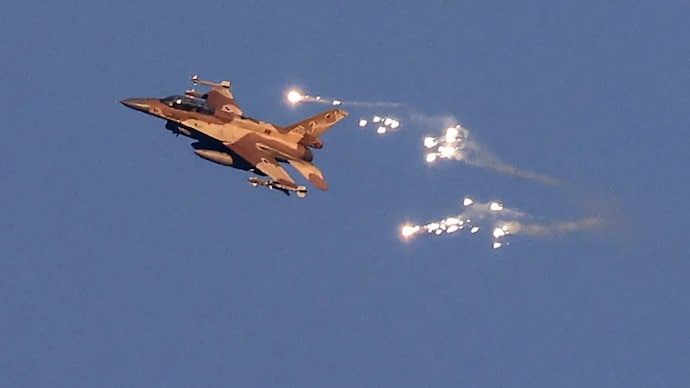
Israel has conducted a series of airstrikes on Iran’s military and drone facilities, dubbed “Operation Days of Repentance,” in retaliation for Iran’s ballistic missile barrage on October 1. The strikes, carried out by 100 Israeli fighter jets in three waves, targeted 20 missile and drone facilities across Iran.
According to reports, the Israeli army deployed its top-of-the-line fighter jets, including the fifth-generation F-35 Adir, F-15I Ra’am, and F-16I Sufa, which covered approximately 2,000 kilometers.
The weapons used included the ‘Rampage’ long-range, supersonic missile and the ‘Rocks’ next-generation extended stand-off air-to-surface missile.
The airstrikes were conducted in groups of 25-30 jets, with 10 jets conducting coordinated missile strikes while the others provided cover and diversion.
The operation was divided into three waves, with the first wave targeting Iran’s radar and air defense facilities, followed by strikes on military bases and missile and drone facilities in the second and third waves.
Israeli Prime Minister Benjamin Netanyahu has vowed that Iran “will pay” for its actions, calling the missile barrage a “big mistake” ¹. The US has also pledged to work with Israel to ensure Iran faces repercussions for its actions, promising “severe consequences.”
Iran has claimed that its air defense system successfully countered the Israeli attacks, with “limited damage” to some locations in the provinces of Tehran, Khuzestan, and Ilam. However, the full extent of the damage is yet to be confirmed.
The airstrikes mark the latest escalation in the ongoing conflict between Israel and Iran, which has been fueled by tensions over Iran’s nuclear program and its support for militant groups in the region.
The operation has put the Middle East on high alert, with Iran and its neighbor Iraq closing their respective airspaces following the strikes.