
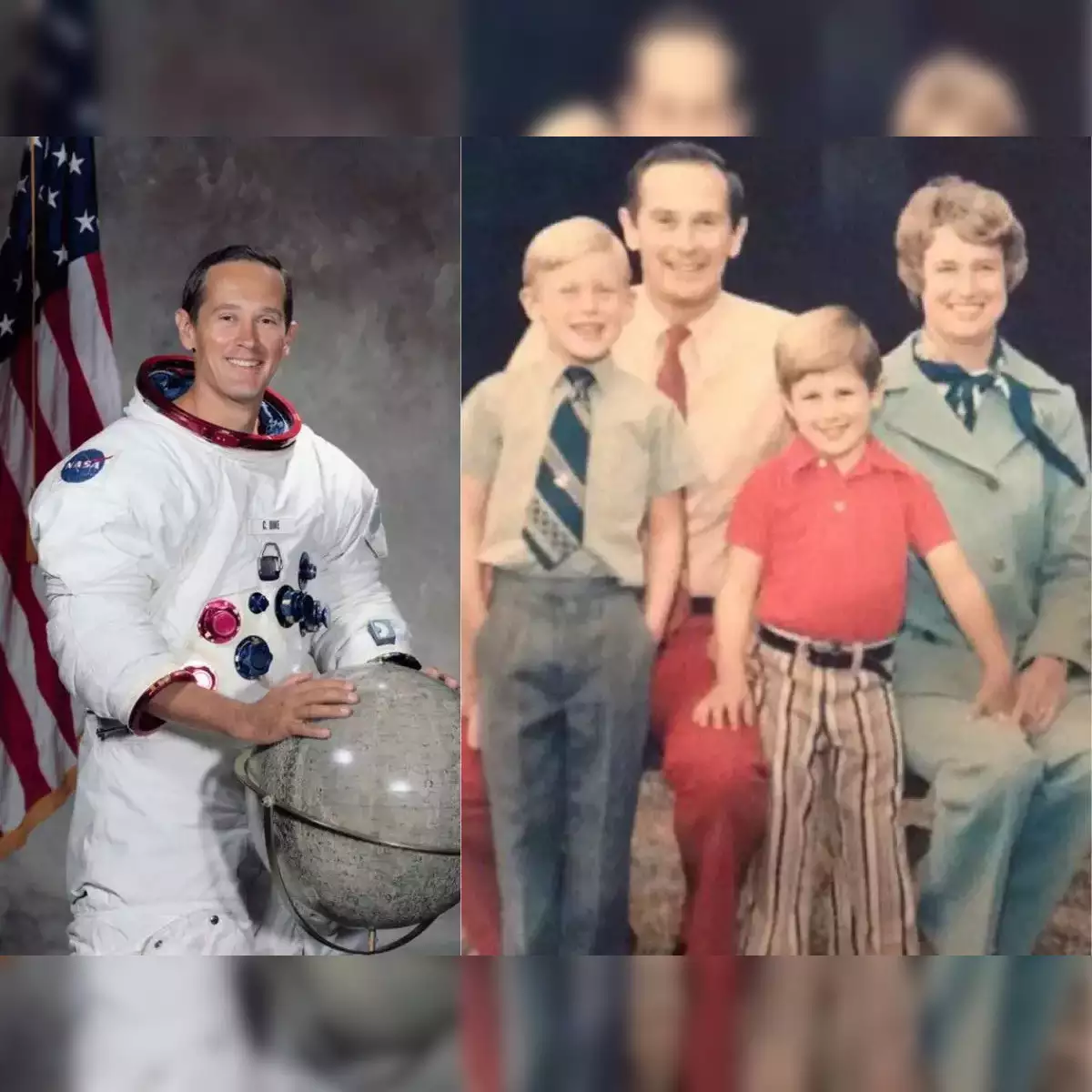
Astronaut Charles Duke, who landed on the moon in 1972 as part of the Apollo 16 mission, left a personal and poignant reminder of his family’s support during his historic journey.
Among the scientific equipment and American flags planted on the lunar surface, Duke chose to leave behind a family photo. This small, personal token held significant emotional value for the astronaut, serving as a reminder of the loved ones who supported him throughout his endeavors.
The photograph, which features Duke’s wife and two sons, was a cherished keepsake that Duke wanted to share with his family in a unique and lasting way. In an interview, Duke reflected on the decision to leave the photo behind, stating,
“It was a reminder of where I came from and who I was doing this for.” This simple gesture underscored the importance of family and personal connections in Duke’s life, even as he embarked on an extraordinary adventure.
The Apollo 16 mission marked a significant milestone in space exploration, with Duke becoming one of the select few to set foot on the moon’s surface.
The mission’s accomplishments extended beyond the scientific realm, as Duke’s personal gesture humanized the experience and highlighted the importance of family support. By leaving the photo behind, Duke created a lasting testament to the personal sacrifices and motivations that drive individuals to push the boundaries of human achievement.
The family photo remains on the moon to this day, serving as a poignant reminder of the human side of space exploration. As Duke noted, “It’s a reminder that even in the vastness of space, there’s still a connection to the people and things that matter most.” This small, personal token has become an enduring symbol of the mission’s significance and the importance of personal connections in the pursuit of greatness.
Duke’s decision to leave the photo behind has also sparked interest in the personal stories and motivations of astronauts who have ventured into space. The experiences of these individuals offer a unique perspective on the human side of space exploration, highlighting the personal sacrifices and motivations that drive them to pursue extraordinary achievements.
As the space program continues to evolve, the stories of astronauts like Charles Duke serve as a reminder of the importance of human connection and personal motivation in the pursuit of greatness.