
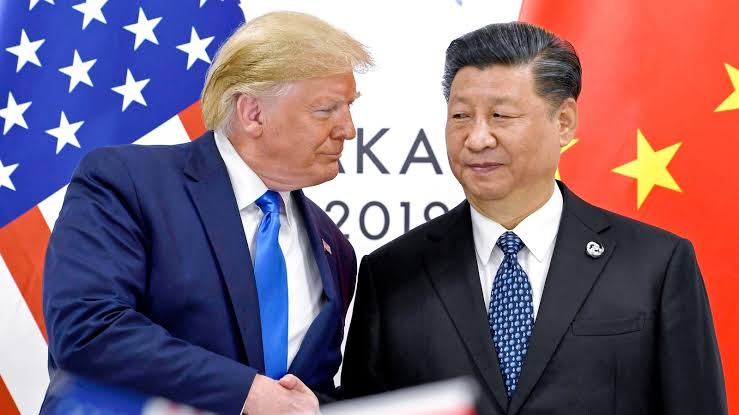
President Donald Trump has unveiled plans to open U.S. campuses to as many as 600,000 students from China, a major increase from the current enrollment of about 270,000.
The move comes at a time of intense trade negotiations with Beijing, suggesting a new approach that pairs economic pressure with cultural engagement.
The decision marks a shift from earlier policies that threatened to restrict Chinese student access.
Earlier this year, Secretary of State Marco Rubio announced that the administration would revoke visas for students with links to the Chinese Communist Party or those working in sensitive scientific fields.
That announcement drew concern from universities and lawmakers who warned of damage to American research partnerships and financial stability.
Trump’s latest stance reverses course, promising to more than double the number of Chinese students on U.S. soil.
If fully realized, this would surpass the pre-pandemic peak of around 370,000 in 2019.
For many higher education institutions, the plan could bring a surge of tuition revenue and renewed international exchange at a time when enrollment levels have been slow to recover.
The announcement is tied closely to broader U.S.–China trade tensions.
Washington recently imposed tariffs of up to 145% on Chinese goods, with Trump floating additional levies of 200% on rare-earth magnets, citing Beijing’s strong hold on that market.
China responded with its own duties, but both sides agreed to pause further escalations earlier this summer.
Allowing more students into American universities may be a gesture intended to soften the edges of the trade dispute while maintaining leverage in negotiations.
It signals an effort to balance economic confrontation with cultural openings that could reduce friction between the two nations.
If carried out, the plan would represent one of the largest educational exchanges in history, reshaping academic ties and placing student diplomacy at the center of U.S.–China relations.