
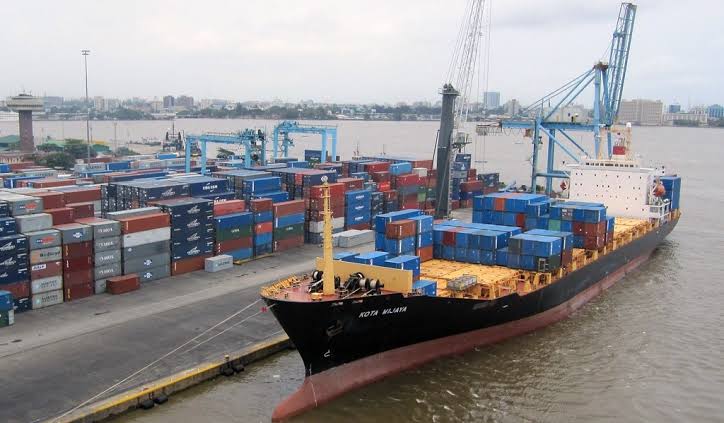
An economist, Bongo Adi, has called on the Federal Government to address prolonged port delays, investment risks and legal uncertainties hindering the growth and competitiveness of Nigeria’s maritime industry.
Adi said the challenges were discouraging shipping companies, insurers and financial institutions from investing in the sector, while making Nigerian ports less attractive to international operators.
He made the call on Friday in Lagos during the 17th Lecture and Annual General Meeting of the Nigerian Maritime Law Association (NMLA).
The economist described the country’s maritime sector as one with enormous potential but limited economic returns, stressing that investment decisions depended on the level of risk and expected returns rather than opportunities alone.
Drawing on Michael Kremer’s O-ring theory of economic development, Adi explained that the performance of an industry depended on the efficiency of interconnected activities, with weaknesses in one area capable of affecting the entire value chain.
He disclosed that Nigerian ports handled 68.2 million tonnes of cargo and 815,236 twenty-foot equivalent units of containers in the first half of 2026. Despite the volume, Nigeria ranked 45th globally in liner connectivity, trailing some smaller regional competitors.
According to him, infrastructure was no longer the major constraint, as Apapa, Tin Can and Onne ports had recorded improvements in vessel turnaround times compared with ports in Lome, Tema and Abidjan.
He, however, identified delays in cargo clearance as a significant obstacle and called for a reduction in the clearance period from the current 21-day target to seven days.
Adi noted that shipping operators and financiers considered turnaround time, investment risks and the enforceability of legal agreements before committing resources to the Nigerian maritime industry.
He proposed that the NMLA establish an annual Maritime Justice and Competitiveness Scorecard beginning in November 2027, backed by a dependable official data system.
He also urged industry stakeholders to channel investments towards the weakest areas of the maritime value chain to improve overall efficiency.
The NMLA President, Mike Igbokwe, SAN, said the annual lecture provided a platform for industry players to exchange ideas and examine issues affecting the development of the maritime sector.
Igbokwe expressed hope that the discussions would produce practical recommendations, while encouraging participants to strengthen cooperation within the industry.
He maintained that Nigeria had an adequate legal framework, particularly the Admiralty Jurisdiction Act, to protect maritime lenders but identified delays in enforcement, lengthy court proceedings and statutory provisions that disadvantaged mortgage holders as major setbacks.
At a panel discussion titled *“Bankability of the Nigerian Maritime Industry and What Lenders Really Want,”* participants examined the conditions necessary to attract financing into the sector.
The moderator, maritime lawyer Ogochukwu Eze, said discussions should centre on the practical requirements for securing investment, protecting lenders’ funds and enforcing financial agreements.
Another maritime lawyer, Chibueze Moubuikwu, said lenders considered the purpose of vessel acquisition, employment contracts and the reliability of projected revenue before approving loans.
He listed other considerations as vessel specifications, existing financial commitments, borrowers’ credibility, insurance arrangements and the enforceability of ship mortgages.
Similarly, the Head of Institutional Banking Group at Sterling Bank Plc, Moyomade Akinsoye, said financial institutions assessed sponsors’ credibility, operators’ experience, contractual terms, business partners, vessel age, nationality and insurance coverage.
Akinsoye said maritime financing remained achievable but required thorough evaluation, particularly because it involved long-term investments and patient capital.
A legal counsel at Tere Maritime Ltd., Ogonnaya Emele, stressed that shipowners needed to demonstrate their vessels’ capacity to generate enough revenue to cover operational expenses, repay loans and deliver profits.
She identified market research, charter agreements, employment plans, technical expertise and predictable cash flows as important requirements for attracting financing.
A financial expert, Yewande Sebore, also emphasised the importance of legal certainty and clearly defined financing agreements in determining whether maritime projects were bankable.
Sebore said lawyers contributed to the process through due diligence, verification of sponsors’ credibility, contract reviews and examination of assignment rights and possible restrictions on cash flows.
A retired Nigerian Navy admiral, Niyi Labinjo, said maritime financing covered vessel acquisition, working capital, maintenance and daily operations, making it necessary to adopt appropriate funding arrangements from the beginning.
He advocated a blended financing model involving commercial banks, development finance institutions and government support to provide affordable loans and sustainable funding for shipowners.
The event attracted the President of the Maritime Arbitrators Association of Nigeria, Jean-Chiazor Anishere, SAN; NMLA Secretary, Nneka Obianyor; the association’s First Vice-President, Adewale Olawoyin; and a member, Oluseyi Fajuyogbe.
Other attendees included maritime lawyers, representatives of agencies under the Federal Ministry of Marine and Blue Economy, bankers, students and other industry stakeholders.
(NAN)