
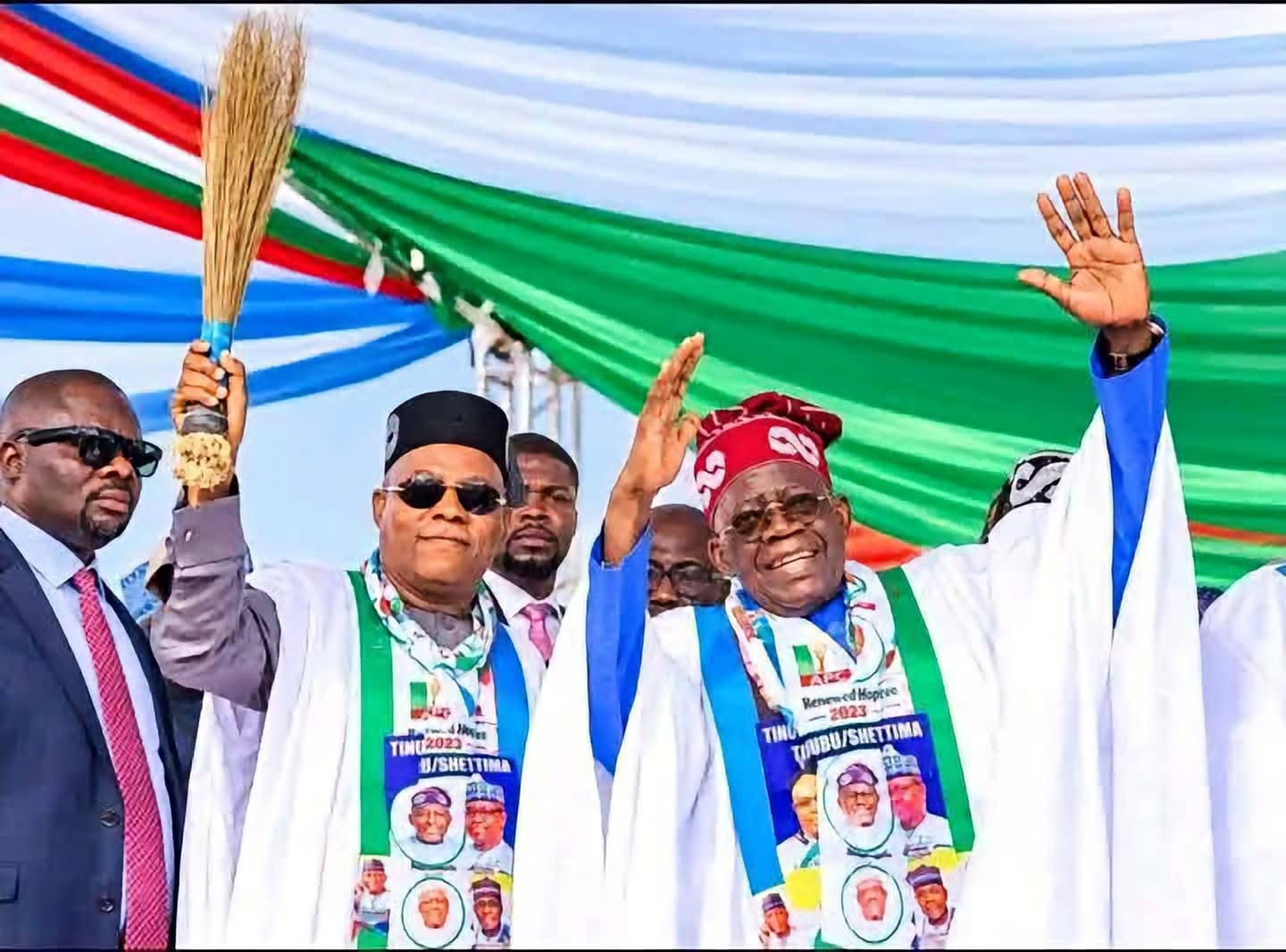
With 53 days to the polls, President Bola Tinubu’s administration has highlighted a ₦450 billion agricultural financing intervention and a proposed ₦1.5 trillion recapitalisation of the Bank of Agriculture as major pillars of its drive to strengthen food security, empower farmers and expand domestic food production.
The figures, unveiled by the All Progressives Congress (APC) Presidential Campaign Council, underscore the administration’s agricultural investment drive, with particular emphasis on smallholder farmers and farming communities across Northern Nigeria.
In a statement issued on Sunday, Council spokesperson, Dele Alake, disclosed that more than 500,000 smallholder farmers across 16 states had already benefited from agricultural financing and support programmes implemented through the Bank of Agriculture.
The intervention includes the Renewed Hope Smallholder Support and Value Chain Fund, valued at ₦250 billion, which has facilitated the distribution of approximately 2.5 million bags of fertiliser and 300,000 bags of certified seeds. More than 70,000 women are among the beneficiaries.
The programme is targeting two million farmers and the distribution of over 10 million bags of fertiliser as the federal government intensifies efforts to increase agricultural productivity.
A major highlight is President Tinubu’s approval of ₦1.5 trillion for the recapitalisation of the Bank of Agriculture, a move expected to strengthen the institution’s capacity to provide affordable financing to farmers, cooperatives, processors and agribusiness operators.
The administration is also implementing a ₦200 billion Guaranteed Minimum Price Programme through which the bank has procured about 170,000 metric tonnes of maize, rice, sorghum and cassava to support commodity markets and protect farmers from distress sales.
Northern Nigeria features prominently in the initiative, with Kaduna, Kano, Katsina, Niger, Borno, Gombe, Taraba, Adamawa, Yobe and Bauchi among the states receiving attention.
In a targeted intervention for onion farmers, the Bank of Agriculture has introduced a financing scheme in partnership with the National Onion Producers, Processors and Marketers Association of Nigeria (NOPPMAN), which represents more than 11,800 farmers.
Under the arrangement, farmer cooperatives provide 30 per cent of their input costs, while the bank finances the remaining 70 per cent.
The programme also seeks to improve access to quality seeds, fertiliser, processing funds and solar-powered storage facilities.
Other initiatives include dry-season farming financing targeting 400,000 farmers for the 2026 farming cycle, the Nigeria Ginger Recovery Programme, women’s cooperative financing and youth participation in agriculture.
The ginger recovery initiative has supported 3,200 farmers in Kachia, Kaduna State, with blight-free seeds and is being expanded towards 20,000 hectares across 16 states.
Similarly, the Renewed Hope National Agricultural Mechanisation Programme has deployed 1,571 tractors to 23 states, with the capacity to mechanise 1.2 million hectares of farmland.
The administration is also targeting at least 50,000 women through insured cooperative production financing at nine per cent.
Another major component is a ₦385 billion productive-use-of-electricity programme expected to provide 44,000 electric cargo tricycles and 100,000 solar irrigation pumps, with 500,000 farming families as its target beneficiaries.
The APC Presidential Campaign Council said the interventions reflect President Tinubu’s determination to make agriculture a stronger contributor to economic growth, employment generation and national food security.
With the election approaching, the administration’s agricultural commitments are set to feature prominently in the political debate, particularly as Nigerians continue to look for tangible improvements in food availability, affordability and farmers’ incomes.
For millions of farming households, the ultimate test will be whether these financial commitments translate into higher yields, better incomes and more affordable food on Nigerian tables.