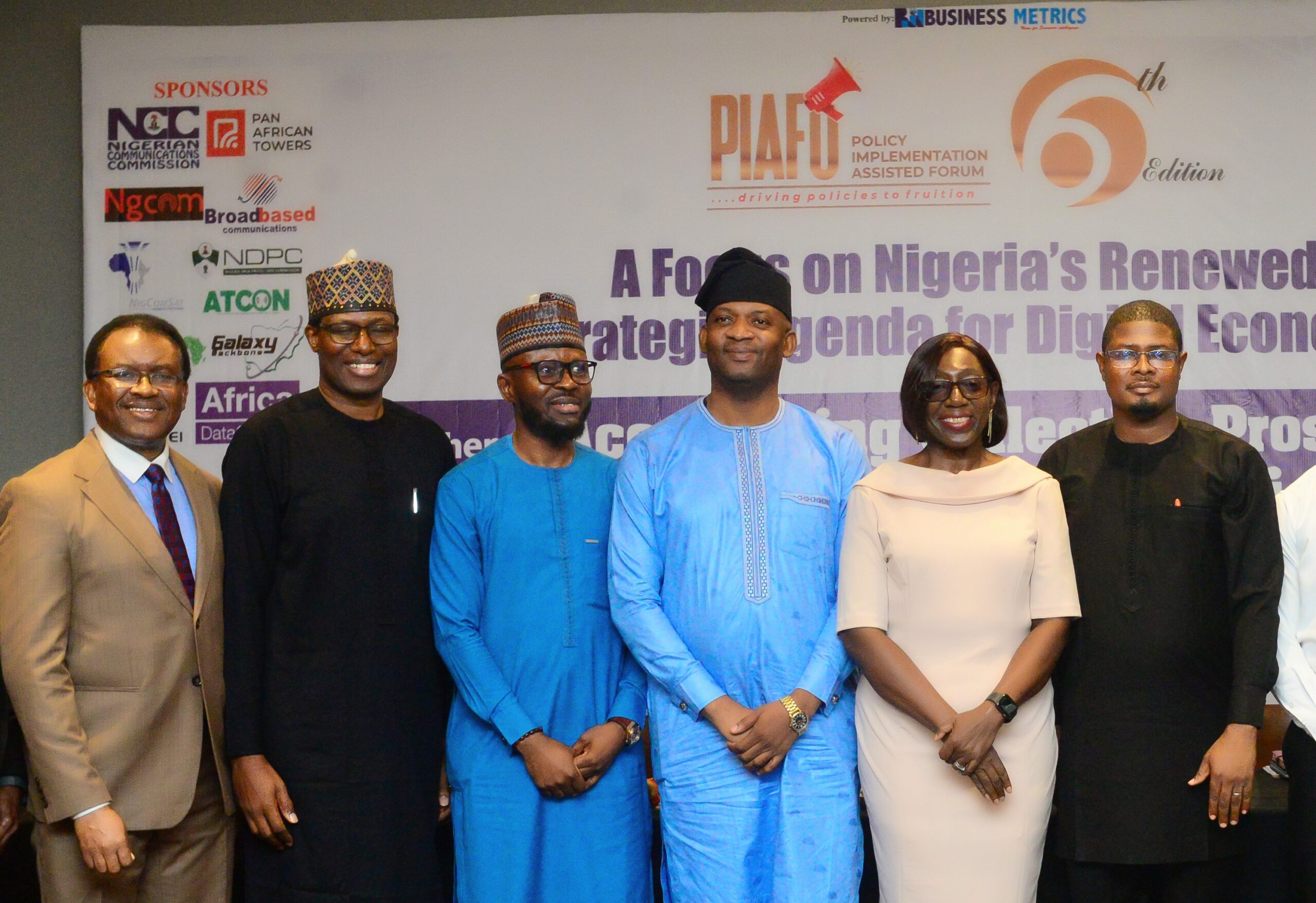
By Omonu YG Nelson
Stakeholders in the telecommunications industry have identified obstacles that may hinder the Federal Government’s plan to deploy 90,000 kilometers of fibre optic cables across the country. The stakeholders, who spoke at the Policy Implementation Assisted Forum (PIAFO) in Lagos, said the project faces challenges such as Right of Way charges, multiple taxation, and levies, which are under the control of state governments.
“The issues of high cost of Right of Way (RoW), destruction of fibre by road construction companies and vandals all need to be addressed for this new SPV initiative to be successful,” said Mr. Chidi Ibisi, Executive Director of Broadbased Communications.
Mr. Chidi Ajuzie, Group Chief Operating Officer of WTES Projects Limited, highlighted the challenges of informal Right of Way charges by hoodlums in states, adding that “the biggest challenge to fibre cable laying in Nigeria is the informal Right of Way.”
Engr. Gbenga Adebayo, Chairman of the Association of Licensed Telecommunications Operators of Nigeria (ALTON), emphasized the need for state governments to take ownership of the project, saying “the governments at sub-nationals should take ownership. This issue of state governments seeing Right of Way as IGR should be a thing of the past.”
Dr. Ayotunde Coker, Chief Executive Officer of Open Access Data Centre (OADC), stressed the need for private sector partnerships in executing the project, adding that “the World Bank can put money into the government, but it needs private sector partnerships as the execution engine.”
The stakeholders agreed that addressing these obstacles is crucial to the success of the project, which aims to provide the Nigerian digital economy with the backbone infrastructure it needs.