
By Ngozi Nwankwo
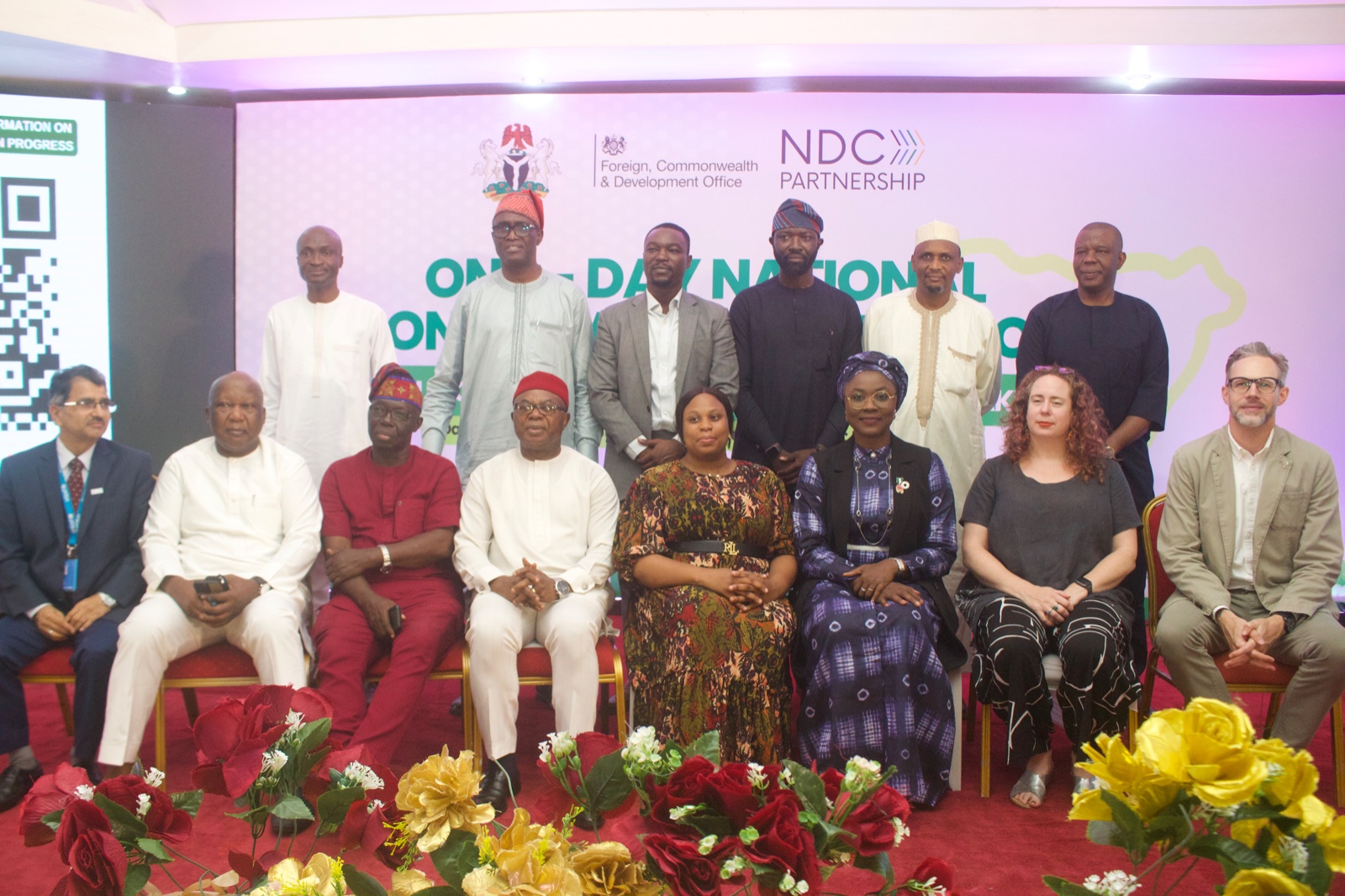
National Council on Climate Change (NCCC) convened a one-day National Consultative Workshop to assess Nigeria’s progress in the implementing of its Nationally Determined Contributions (NDCs).
The workshop is part of the country’s broader effort to review and enhance its climate commitments.
Declaring the workshop open in Abuja, the Director General of the (NCCC)Dr. Nkiruka Maduekwe, highlighted the ongoing engagements with relevant partners in Relations to Nigeria’s NDCs “We’ve put out calls to the NDCs like the Foreign, Commonwealth & Development Office (FCDO) who are already supporting the national stocktake by engaging consultants for this crucial project.” She said.
Maduekwe acknowledged growing interest from other development partners in supporting Nigeria’s energy transition, renewable energy solutions, and visibility studies adding that the Council has received tremendous support, in areas such as energy transition and renewable energy corridors, which present numerous opportunities for Nigeria,
Related News:
Burkina Faso Introduces New Biometric Passport Without ECOWAS Logo
GUFWAN Pledges Support For Representatives On Disabilities At UN Committee
She stressed the significance of capacity building to the success of the project even as she acknowledged support from the United Nations Environment Programme (UNEP) and the Climate Promise initiative, which made it possible for the recent intensive workshop for all Ministries, Departments, and Agencies (MDAs) on climate financing.
According to her, understanding climate finance is crucial if the Council is to access the necessary funds to achieve the NDCs.
Dr. Maduekwe emphasized the importance of involving seasoned climate negotiators in Nigeria’s preparations for the upcoming COP29, stating that Climate negotiation is a career pathway, not a one-off event, adding that “COP29 is all about negotiation, and we are committed to building the capacity of our negotiators to ensure that Nigeria’s position is well-protected.” She said.
In a goodwill message, the Minister of Youth Development Dr. Jamila Ibram Bio, said her Ministry made a policy that each corps member will be tasked with planting 10 trees within their service year.
According to her, With approximately 400,000 corps members annually, this translates to 4 million trees to be planted each year and “by 2030, we aim to have successfully planted 20 million trees across the country.”
She said that the policy is a key part of the Ministry’s commitment to environmental sustainability expected, not only to contribute to combating deforestation, but also inspire a new generation of environmentally conscious leaders.
In her remark, Samantha Harrison, First Secretary of Climate Diplomacy in West Africa, British High Commission, stated that UK understands the importance of translating strong climate policies into concrete action, noting that the NDC Stocktake will help Nigeria prioritize resources, skills, and funding across key sectors of its economy as well as ensuring that climate change is integrated into all aspects of development and planning.
Also speaking at the event, Mr. Bryan Lupton, an Economic Officer representing the US Embassy, highlighted the fruitful discussions held during the inaugural US-Nigeria Binational Commission in April, 2024, where climate and energy issues were the key focus.
Mr. Lupton emphasized the active involvement of various US government agencies, including the US Department of Energy, the US Agency for International Development (USAID), and the State Department Energy Bureau, in supporting Nigeria’s efforts.
In his contribution, Hon. Sam Onuigbo, Chairman, Member of (South East), Governing Board of North East Development Commission, highlighted the need for a comprehensive assessment of the country’s NDCs implementation progress and the identification of areas for improvement.
“We have made significant strides since launching our NDC implementation framework, but there is still much to be done,” he stated. “By conducting a thorough review, we can pinpoint gaps in our efforts and take targeted action to ensure we remain on track to achieve our ambitious climate goals,” said Onuigbo.