
China’s Ambassador to Nigeria Outlines Strategies for Poverty Reduction
By Omonu YG Nelson
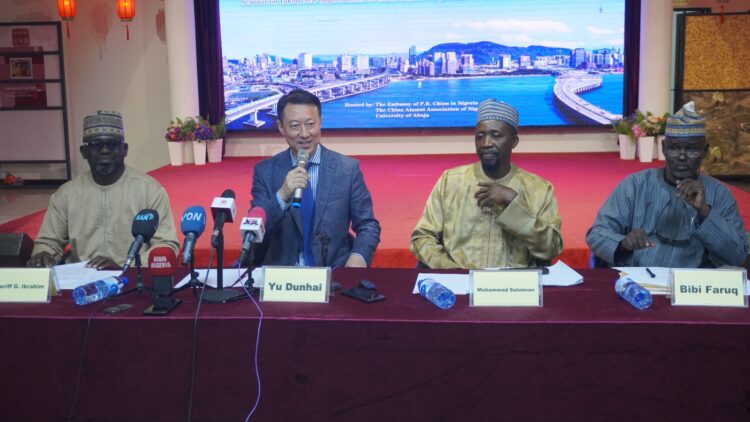
Abuja, Nigeria – Chinese Ambassador to Nigeria, Yu Dunhai, has emphasized the importance of investments in food production, education, vocational training, and infrastructure in the fight against poverty.
Speaking at a seminar titled “Taking New Opportunities for China-Nigeria Cooperation in Deepening Reforms in the New Era” held at the China Cultural Centre in Abuja, Ambassador Dunhai shared China’s successful model in lifting over 800 million people out of poverty since 1978.
“Feeding the people is paramount,” Ambassador Dunhai stressed, highlighting the significance of agriculture in poverty alleviation. Despite China’s limited arable land, innovative agricultural practices have led to significant increases in productivity. He encouraged Nigeria to enhance its agricultural skills and technologies to boost food security and economic stability.
Education is another critical area, with China dramatically expanding its educational infrastructure, increasing annual university enrollments from fewer than one million to approximately 13 to 15 million today. “Education opens minds to new technologies and opportunities,” Yu said, stressing the importance of equipping individuals with knowledge to sustain their progress.
Vocational training plays a vital role in preparing individuals for the job market and fostering self-reliance. Ambassador Dunhai emphasized the need for Nigeria to invest in vocational training programs that cater to the country’s specific needs.
Infrastructure development, such as robust transportation networks, is essential for connecting rural areas to markets and opportunities. Yu referenced the Chinese proverb, “If you want to get rich, you build roads first,” highlighting his experience visiting remote provinces transformed through extensive highway and tunnel construction.
Ambassador Yu urged Nigeria to embrace globalization, citing China’s journey joining the World Trade Organization (WTO) in 2000, which proved pivotal for economic growth. “Embracing the world is crucial for progress,” he said, advocating for a collaborative approach to development.
With over 133 million Nigerians living in poverty as of November 2022, according to the National Bureau of Statistics (NBS), these strategies are crucial for Nigeria’s progress. The seminar, organized by the Chinese Embassy in Nigeria in collaboration with the University of Abuja and the China Alumni Association, brought together foreign policy experts, academic scholars, members of the diplomatic community, university students, and journalists.
Also speaking at the event, President of the China Alumni Association of Nigeria, Mohammed Suleiman emphasised the importance of cultural reforms and cooperation between Nigeria and China. He highlighted China’s economic growth and development, attributing it to the country’s strong cultural background and traditions.
“Countries that have upheld their own cultures, languages, and traditions are the ones growing in the world today,” Mohammed said.
He praised China’s discipline and focus, citing President Xi’s statements on China-Africa relations and economic cooperation. Mohammed also acknowledged Nigeria’s benefits from partnering with China, particularly in infrastructure development, trade, and employment opportunities.
“The China-Nigeria partnership has been monumental, with Nigeria gaining heavily from China’s investment in railways, seaports, and other areas,” Mohammed noted.
According to the Consul General in Lagos, Nigeria-China trade reached $22.6 billion in 2023. Mohammed emphasized the win-win situation, stating that China is a major buyer of Nigeria’s raw materials and a provider of manufactured goods.
Mohammed concluded by urging Nigeria to develop its own reforms alongside China’s, creating a complex and dynamic cultural landscape marked by continuity and change.