
By Ngozi Nwankwo
The Federal Government, through its Ministry of Environment, has endorsed the International Consortium for Combatting Wildlife Crime, ICCWC Toolkit report
While acknowledging that wildlife and forest crime is a serious and escalating issue, report shows that recently, Nigeria has become a major transit hub for trafficking illicit wildlife products, including pangolin scales, ivory, and other protected species from Eastern and Central Africa.
These products enter the country through porous land borders and exploit Nigeria’s advanced sea and airport infrastructure. To combat these challenges, the Government of Nigeria requested support from the ICCWC in 2019 to implement the Wildlife and Forest Crime Analytic Toolkit and the ICCWC Indicator Framework for Combating Wildlife and Forest Crime.
The ICCWC Wildlife and Forest Crime Analytic Toolkit enables a comprehensive assessment of a country’s preventive, law enforcement, prosecutorial, and judicial responses to wildlife and forest crime. It reviews data systems, processes, and wildlife demand, identifying strengths and gaps in current responses.
The Toolkit provides short and long-term recommendations to address key challenges, offering an evidence base for authorities and ICCWC to enhance national responses to wildlife and forest crime. The results are compiled into a comprehensive report, informing the development of specific work plans for national capacity-building and technical assistance.
The Minister of Environment, Dr. Balarabe Lawal, represented by the Director of Planning and Research, Federal Ministry of Environment, Nigeria, noted that while Nigeria has taken several proactive steps to combat wildlife crime, much more needs to be done as wildlife crime is a complex transnational issue that requires a multifaceted approach.
Lawal reiterated the commitment of the Government of Nigeria to implement the recommendations in partnership with international and domestic stakeholders.
The United Nations Office on Drugs and Crime (UNODC) has finalized the findings of the ICCWC Toolkit Assessment for Nigeria. The report outlines 33 recommendations to strengthen Nigeria’s wildlife criminal justice system. Key recommendations include:
Supporting the Endangered Species Protection and Conservation Bill 2024
Scaling up joint wildlife investigations through a Joint Investigations Team, including the Nigeria Customs Service, National Environmental Standards and Regulations Enforcement Agency (NESREA), INTERPOL National Central Bureau, and anti-money laundering agencies like the Economic and Financial Crimes Commission (EFCC) and the Nigerian Financial Intelligence Unit (NFIU); Establishing a wildlife crime unit in the Directorate of Public Prosecutions of the Federation;
Enhancing wildlife forensics capacity building efforts; and providing operational and technical assistance tools and skills for frontline enforcement authorities
However, UNODC promised it will support the implementation of ICCWC recommendations.
UNODC Officer-in-Charge, Mr. Danilo Campisi, emphasized the urgency of implementing the Toolkit’s recommendations, citing key data and research trends.
The 2023 Organised Crime Threat Assessment for Nigeria and the 2024 World Wildlife Crime Report both highlight the severe depletion of Rosewood in Nigeria, noting that the CITES ban on rosewood exports may have come just in time to prevent the species’ extinction.
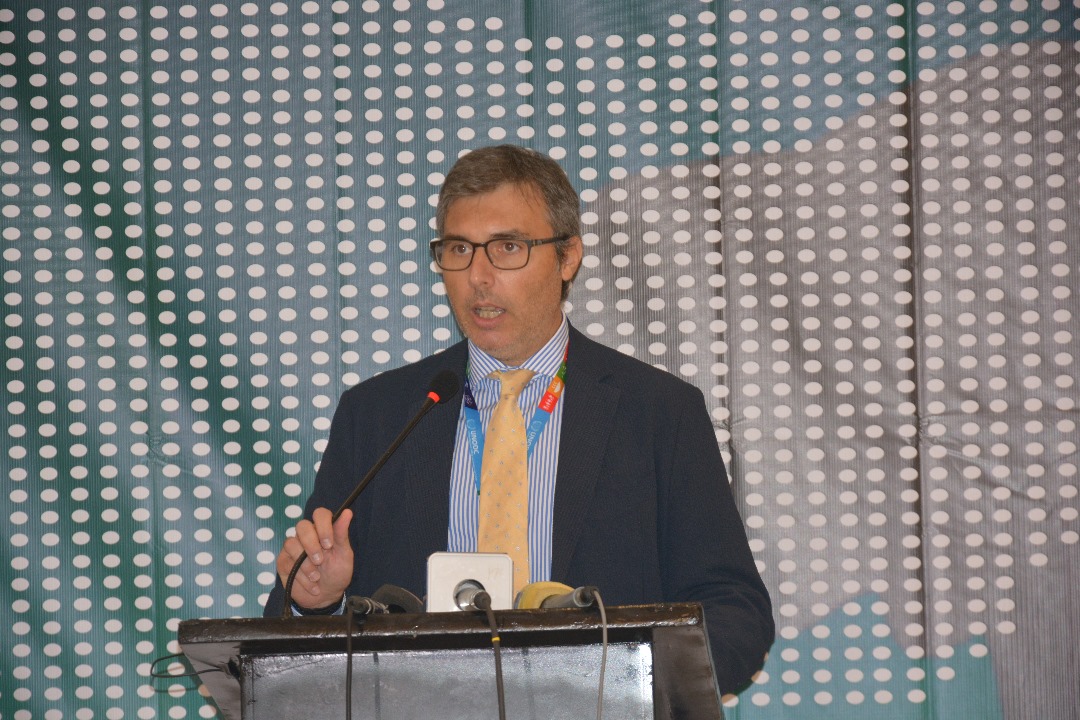
Representative of the European Union Delegation noted that the EU considers Nigeria a priority country to support counter wildlife crime interventions. He advised that the recommendations in the report should be taken seriously by the Office of the Minister of Environment, Conservator General of the National Parks Service and other security agencies. He pledged the EU’s support to continue to provide knowledge, skills and wider capacity to combat wildlife crimes in Nigeria.
In closing, the Director of Forestry, Federal Ministry of Environment, Nigeria, Hajara Sami Umar, extended the Government of Nigeria’s appreciation to the International Consortium for Combatting Wildlife Crime (ICCWC), which comprises INTERPOL, UNODC, World Bank, World Customs Organisation and the CITES Secretariat, noting that the toolkit assessment conducted under their guidance has provided Nigeria with critical insights and actionable recommendations to strengthen national responses to wildlife and forest crime.
She noted that ICCWC’s collaboration with the Federal Government of Nigeria is deeply valued and the Government looks forward to continuing the partnership in the implementation phase.