
By Ngozi Nwankwo
The Federal Ministry of Education has taken significant steps to introduce Peace Education Curriculum.
This initiative, supported by the United Nations Educational, Scientific and Cultural Organization, UNESCO, aims to address the country’s complex history of violence and conflicts and designed to provide students with the knowledge and values needed to prevent atrocities and promote peaceful coexistence.
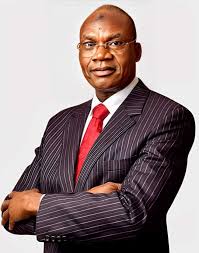
A keynote address by Prof. Tahir Mamman, Minister of Education, at the Ministerial session of the 68th National Council on Education said the peace curriculum would also remind of Nigeria’s rich and diverse history, foster a shared understanding of history and build a more peaceful and inclusive society.
Also Read:
FG Unveils Plastic Waste Reverse Vending Machines For Effective Management
While speaking on review of curriculum, Mamman said Ministry is about rolling out a new curriculum for Basic Education and Senior Secondary Education in Nigeria from this October, designed to incorporate knowledge, skills and values, especially with a special focus on skills, so that students, when they graduate, will have skills that they can connect with the economy and have a productive life.
“The world we live in and its future is very different from the times of old. Today, we share a common challenge that the country’s educational curriculum is all in danger of becoming obsolete as technology is disrupting every industry, including education.
“A well-designed and effective curriculum determines a sustainable development, quality, and the relevance of education. This is the main reason why this Administration places priority on the institutionalization of curriculum development in the overall context of education,” he said.
Speaking on the school safety, the Minister reaffirmed that government has the primary responsibility of protecting and ensuring inclusive and equitable quality education at all levels for all learners.
He assured Nigerians that government is committed to observing all relevant international protocols, conventions and treaties for the protection of the nation’s learners, teachers, leaming institutions and facilities from attack and any other instrument on education which the country has domesticated.
He explained the commitment of federal government towards school safety has led to the adoption of the Safe Schools Initiative and the establishment of the Safe Schools Rapid Response Centre in Abuja with a significant number of schools registered on it.
“It is intended to register all schools in Nigeria to prevent attack. A lot of sensitization of teachers, security agencies and community has been going on,” he said.
Clarifying on the university admission age limit, Mamman said the 18 years age limit earlier misrepresented was only a required age limit for entry of Tertiary institutions not for writing NECO and WEAC.
He said, “There is a need to clarify yet again the misrepresentation on the issue of 18 years, age limit for admission to universities which was earlier mentioned. The Ministry was only drawing attention to the age requirement for entry into tertiary institutions as enshrined in the National Policy on Education (6-3-3-4 System); the UBEC Act and Education (Minimum) Standards Act 1993 and not the age limit for students participating in WAEC, NECO, NBAIS, NABTEB or any ordinary level examination.
“However, the Ministry acknowledges that some children are exceptionally intelligent and the Ministry will work out a guideline to deal with cases of genuine exceptionally intelligent learners.”
According to him, Nigeria’s future hinges on the ability to be part of innovation, digital technology and entrepreneurship which the youths are expected to be part of as key players.
He, therefore, urged the stakeholders to focus on strategies needed to ensure an education in a knowledge-based economy, driven by creativity and digital excellence to chart a better course for the educational advancement of our nation.