
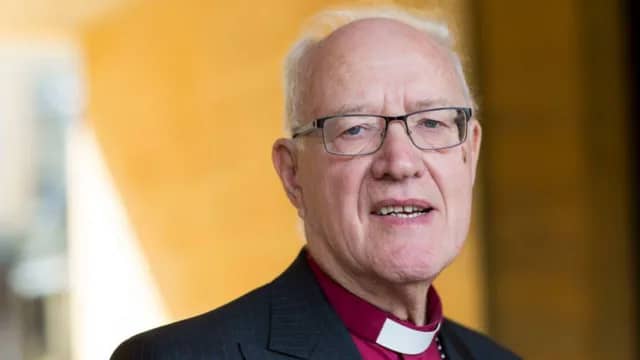
Former Archbishop of Canterbury George Carey has resigned as a Church of England priest after a BBC investigation revealed he had advocated for an alleged child abuser to return to priesthood. Lord Carey, 89, surrendered his “permission to officiate” following the investigation into the Church’s handling of a sex abuse case involving David Tudor, a priest who was banned by the Church for five years in the 1980s.
The investigation found that Lord Carey, who was Archbishop of Canterbury from 1991-2002, had allowed Tudor to return to priesthood under supervision in 1993, despite knowing about the allegations against him. Leaked documents also showed that Lord Carey had agreed to remove Tudor’s name from the central list of clergy who had been subject to disciplinary action.
The Church of England has acknowledged that its procedures at the time were inadequate and that Tudor should have received a lifetime ban. “We recognise these procedures were neither sufficient nor survivor-focussed, and that very different decisions would have been made today,” the Church said in a statement.
Lord Carey’s resignation comes as the Church of England faces mounting criticism over its handling of sex abuse cases. The current Archbishop of York, Stephen Cottrell, is also facing calls to resign over his role in the Tudor case, although he has resisted these calls.
In his resignation letter, Lord Carey wrote: “I wish to surrender my Permission to Officiate… It has been an honour to serve in the dioceses of London, Southwell, Durham, Bristol, Bath and Wells, Canterbury and finally Oxford… I am in my ninetieth year now and have been in active ministry since 1962.”
The BBC investigation found that Tudor was allowed to continue working as a priest despite allegations of abuse, and that he was even made an Honorary Canon of Chelmsford Cathedral. One of Tudor’s victims, Rachel Ford, criticized Archbishop Cottrell’s response to the investigation, saying: “He’s just passing the buck… He’s showing a complete lack of empathy for his victims.”
Ford’s criticism of Archbishop Cottrell is just one example of the widespread outrage and disappointment that has greeted the Church’s handling of the Tudor case. Many are questioning how the Church allowed Tudor to continue working as a priest despite the allegations against him, and why he was not banned from the Church for life.
The Church of England has faced numerous scandals in recent years over its handling of sex abuse cases, including the resignation of Archbishop of Canterbury Justin Welby last month. The Church has promised to take steps to improve its handling of these cases and to provide better support for victims.
However, for many, the Church’s response has been too little, too late. The Tudor case has raised serious questions about the Church’s ability to protect its members and to hold its clergy accountable for their actions. As one commentator noted, “The Church needs to take a long, hard look at itself and ask why it has failed so spectacularly to protect its members from abuse.”
The resignation of Lord Carey is just the latest development in a scandal that is likely to continue to unfold in the coming weeks and months. As the Church of England struggles to come to terms with its past failures, it remains to be seen whether it will be able to regain the trust of its members and the wider public.