
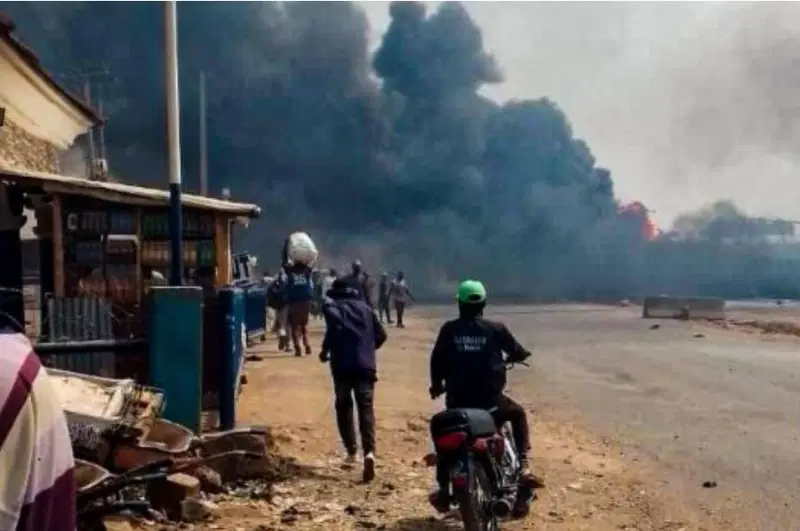
What began as an attempt to salvage a petrol spill ended in catastrophe, as a petrol tanker explosion in Dikko, Suleja Local Government Area of Niger State, claimed at least 70 lives, leaving dozens injured and properties destroyed.
The tragedy unfolded when a tanker loaded with petrol crashed, and efforts to transfer its contents into another tanker triggered an explosion. According to Abdullahi Baba, Director-General of the Niger State Emergency Management Agency (NSEMA), the fuel came into contact with a generator used to power the transfer process, sparking a massive fire.
“The explosion resulted in over 50 fatalities, multiple injuries, and damages running into millions of naira,” Baba confirmed. The Federal Road Safety Corps Sector Commander, Kumar Tsukwam, later updated the death toll to 70, as rescue efforts revealed more victims.
Leadership Reacts
Governor Umar Bago, deeply moved by the devastation, described the incident as “heartbreaking and worrisome.” He extended his condolences to victims’ families and ordered the deployment of more doctors to treat the injured. Visiting the scene, the governor also decried the recklessness of drivers in the area and urged immediate enforcement of stricter traffic measures.
The Chairman of the Nigeria Governors’ Forum (NGF), Governor Abdulrahman Abdulrazaq, joined in expressing condolences. In a statement, he described the explosion as “devastating” and emphasized the need for caution during fuel spill emergencies.
Calls for Reform
The incident has reignited concerns over the handling of fuel spills and the safety measures in place during such emergencies. Local authorities have been urged to establish stronger regulatory frameworks to prevent a recurrence of this type of tragedy.
As families mourn their loved ones and survivors grapple with the aftermath, the Dikko tanker explosion stands as a grim reminder of the dangers posed by lax safety protocols in handling hazardous materials.