
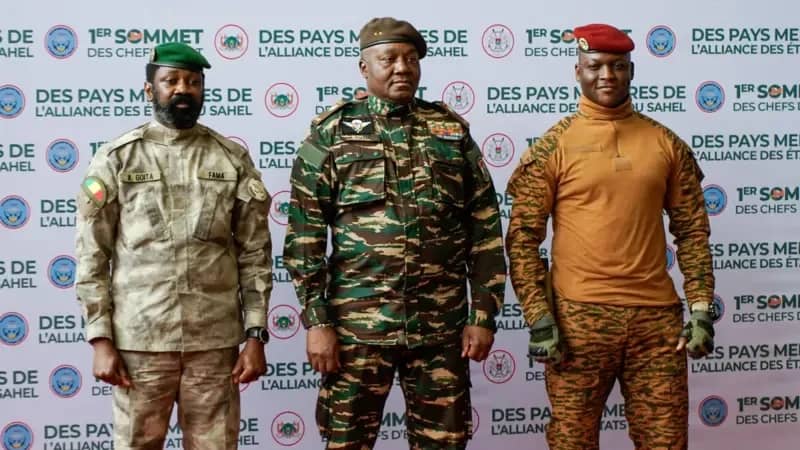
In a bold move, the Sahel states of Burkina Faso, Mali, and Niger have formally withdrawn from the Economic Community of West African States (ECOWAS), effective January 29, 2025.
The withdrawal is part of a broader effort by the three nations to assert their sovereignty and independence from French and Western influence.
As President of Burkina Faso, Ibrahim Traoré, emphasism.ed, “The fight against terrorism in the region is not merely a security challenge but also a ‘war of decolonization’ in the region.”
To facilitate regional integration and cooperation, the Alliance of Sahel States (AES) has introduced a Sahel-wide passport system, allowing citizens of the three nations to travel freely between them. The AES has also announced plans to create a 5,000-strong joint military force to combat jihadist insurgencies in the region.
The ECOWAS President acknowledged the withdrawal, stating, “The authority directs the president of the commission to launch withdrawal formalities after the deadline and to draw up a contingency plan covering various areas.”
The AES’s decision to exit ECOWAS has sparked celebrations across the Sahel region, with citizens and leaders alike embracing the move as a step towards greater autonomy and self-determination. As the region navigates this new era, it remains to be seen how the AES will continue to shape the political and economic trajectory of the Sahel states ¹.