
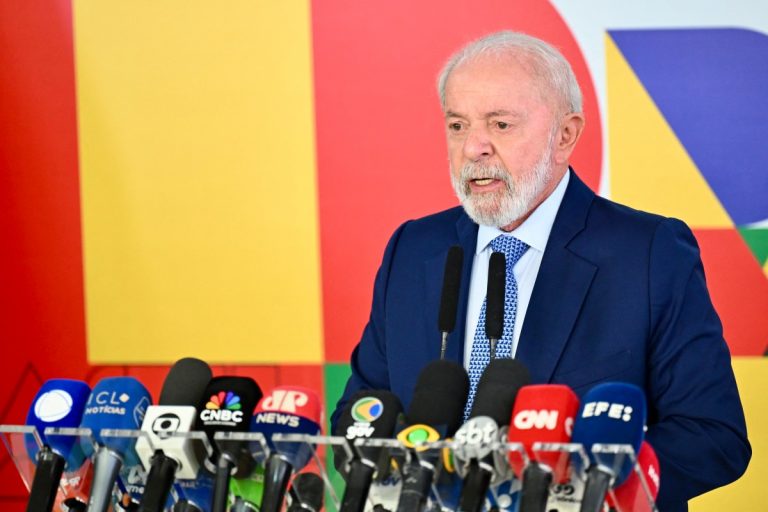
Brazilian President Luiz Inácio Lula da Silva has arrived in Japan for a four-day state visit, aiming to boost trade relations amid rising U.S. tariffs.
Accompanied by a 100-member business delegation, Lula hopes to expand Brazil’s export market and strengthen economic cooperation with Japan.
The visit comes as the United States imposes higher tariffs on steel and other imports, prompting Brazil to seek alternative trade partners. Japan, currently Brazil’s 11th largest trading partner, is seen as a key market for growth. Lula has criticized growing protectionism, stating that countries once advocating free trade are now restricting it.
Talks with Prime Minister Shigeru Ishiba are expected to focus on economic cooperation, security, and joint efforts in biofuel development. The leaders may also reaffirm their commitment to a rules-based international order, a position often viewed as a counter to China’s global influence.
Lula’s schedule includes a welcome ceremony at Tokyo’s Imperial Palace, a state banquet, and an economic forum aimed at promoting Brazilian exports, including beef and aircraft. With China currently Brazil’s top trade partner, experts believe diversifying exports will be challenging but necessary for economic stability.
Japan, on the other hand, sees stronger ties with Brazil as a way to prevent the South American country from aligning too closely with China and Russia, both members of the BRICS economic alliance.
Beyond trade, the visit carries historical significance. Brazil is home to the world’s largest Japanese diaspora, and Lula’s government recently issued a formal apology for past mistreatment of Japanese immigrants. Thousands were displaced and incarcerated during and after World War II, and Lula described the apology as a long-overdue acknowledgment of past injustices.
As both nations explore deeper collaboration, Lula’s visit marks an important step in reshaping Brazil’s global trade strategy while reinforcing historical and diplomatic ties with Japan.