
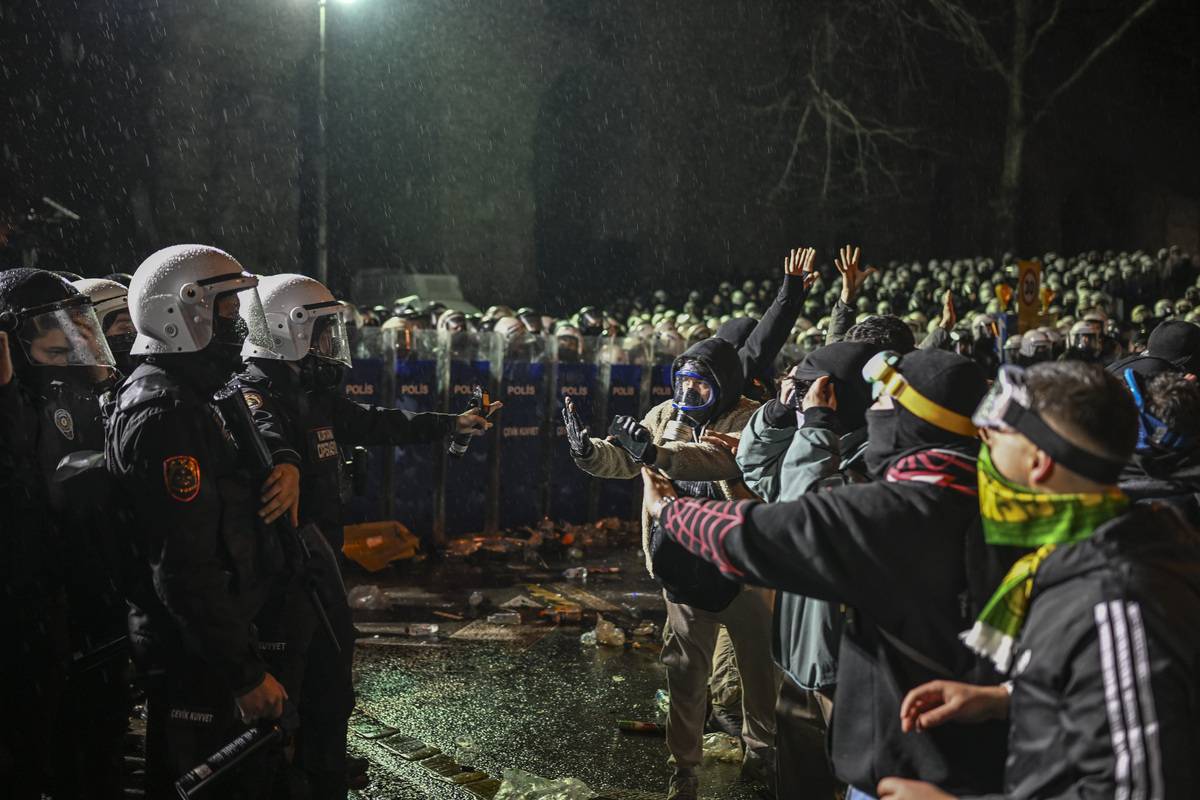
Turkish authorities have detained 1,133 people across the country as protests rage on following the arrest of Istanbul Mayor Ekrem İmamoğlu, Interior Minister Ali Yerlikaya announced today.
İmamoğlu, a key political rival of President Recep Tayyip Erdoğan, was arrested last Wednesday on corruption charges, which he denies. His detention has ignited Türkiye’s largest street protests in over a decade. On Sunday, a court ruled that he would remain in jail while awaiting trial.
Despite government-imposed bans on street gatherings in many cities, demonstrations have persisted for five consecutive nights, with hundreds of thousands taking part. The protests have largely been peaceful, though clashes with security forces have been reported. Yerlikaya stated that 123 police officers had been injured and warned that authorities would not tolerate “the terrorising of the streets.”
Among those detained are nine journalists, including an Agence France-Presse (AFP) photographer. The Journalists’ Union of Türkiye reported their arrests but did not specify the reasons behind them.
The main opposition Republican People’s Party (CHP), which İmamoğlu belongs to, has called for continued demonstrations, denouncing the mayor’s arrest as politically motivated and an attack on democracy. İmamoğlu himself has urged nationwide protests, dismissing the charges as “unimaginable accusations and slanders.”
Erdoğan’s government insists that the courts are independent and denies any political influence over the case. However, many view the move as an attempt to sideline İmamoğlu, who was expected to challenge Erdoğan in upcoming elections.
The CHP held a primary election on Sunday, where 15 million votes were cast in support of İmamoğlu as the party’s presidential candidate. His arrest has only intensified opposition to the government, with critics arguing that his detention is a strategy to eliminate Erdoğan’s strongest competitor from the political scene.
As protests continue and international attention grows, the situation in Türkiye remains highly volatile, with both the opposition and government refusing to back down.