
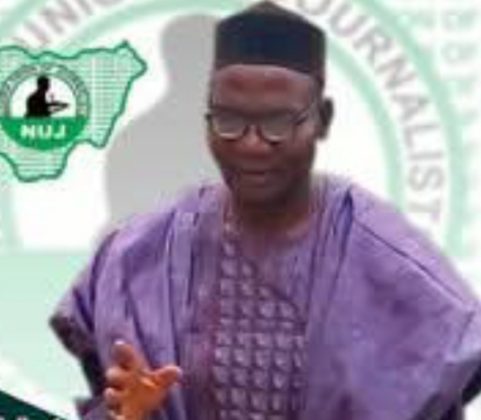
Emmanuel Awari-Jalingo
As Journalists all over the country celebrate Seventy years of existence, they have continue to bear their minds and experiences.
Speaking on the significance of the anniversary, the state Chairman, Nigeria Union of Journalists, Taraba State Council, Comrade Mathew Elude Jen describe the period as a time to replicate on the past.
“It is a period for us to say the good, bad and ugly. Let me start with the good, NUJ has been a body that have been fighting for the good of Journalists across the globe, because Journalists are not only found in Nigeria, but across the globe.
“In Journalism Profession, we stand for the masses, unlike other associations who’s Officials stand for their Members alone.
“We fight for the good of the masses generally, that is why it is referred to Fourth estate of the Realm.
“Journalists ensures that the right of every individuals are protected. They stand for the Democracy of the country.
“They fight to ensure that certain negative policies of government are voted against and ensure that good policies are implemented, I consider this to be good aspects of the profession.
He pointed out that Journalists on the cause of carrying out their official duties, leads to death of so many of them.
“This is not only happening in Nigeria, it is all over the globe. You remember the story of late Dele Giwa who was killed in time bomb, I think this is still fresh in the memories of those who grew up and are still working as Journalists today.
“I remember in Indonesia, a 40 year old Journalist was murdered alongside his wife, on a story he wrote on illegal gambling by some groups and government.
“During the Liberian crisis, we lost so many prominent Journalists, so those are some ugly parts of the Journalism Profession – he said.
Also speaking, Taraba State Chairman of Correspondent Chapel, Mr. Gabriel Yough
has this to say,
“The Nigeria Union of Journalists (NUJ) as a union harbouring journalists has been the most outstanding union in the history of Nigeria. It’s activities from pre- Independent era, where journalists fought hard for independence for the country to the time when the Military hajacted the leadership of Nigeria cannot be overemphasied.
“The NUJ has been through a lot as a union but it’s contribution to national development is invaluable. However, the union needs to do more now that the democracy it fought for is dangerously derailing from its tenets.
“I urge the NUJ members to constantly be reminded that journalism is a tool of justice and continue to practice it to save the soul of nation and democracy with the same energy it fought for Independence and against the military rule.
On his part, the former National Secretary, Nigeria Union of Journalists, Comrade Shu’aibu Usman Leman in a statement, narrates vividly on the experiences that Journalists pass through while carrying out their Official duties.
“As we commemorate the 70th anniversary of the Nigeria Union of Journalists – NUJ from 15th March 1955 to 15th March 2025, it is imperative that we pause to acknowledge and honour our fallen colleagues, tragic victims of impunity.
“Every act of violence against journalists – be it intimidation, harassment, or murder – constitutes a fundamental assault on the very principles of democracy and freedom of expression that we hold dear.
“As the esteemed journalist and advocate for press freedom, Anna Politkovskaya, astutely observed, “Without journalism, there are no freedoms.”
According to him, the courageous pursuit of truth by journalists, alongside their unwavering commitment to exposing corruption and injustice, must not be forgotten or overlooked, adding that the deafening silence surrounding these appalling acts emboldens those who seek to suppress dissent and obscure the truth.
“Therefore, we stand resolutely in solidarity with the families of those who have lost their lives in the line of duty, and we must collectively demand justice.
“Our commendation also extends to the fortitude of survivors, who bear the scars of impunity yet continue their vital work.
“It is crucial that we advocate for enhanced protections, accountability, and a culture of safety for journalists.
“Unless we confront and dismantle this culture of impunity, the future of journalism in Nigeria hangs precariously in the balance. We must remember the sacrifices made and reaffirm our unwavering commitment to upholding their legacy in the fight for truth and justice.
“According to the report “State of Media Freedom in Nigeria” by the Media Foundation for West Africa and the Nigeria Union of Journalists, for the period from 2016 to 2020, Nigeria recorded some of the highest levels of violence targeting journalists.
He pointed out that these statistics serve as an indictment of the deficient record on democracy and the rule of law in Nigeria, where a lack of transparency, corruption, and the politics of exclusion frequently culminate in frustrations and violent rivalries, creating perilous environments in which journalists become easy targets for powerful forces intent on suppressing dissent.
“Acts of impunity against journalists in Nigeria manifest in diverse forms, from murder to harassment and intimidation.
He mentioned some of the most concerning instances of acts of impunity perpetrated against members of the press in Nigeria to include:
*Minere Amakiri: A reporter then for the Nigerian Observer, the former Bendel State newspaper, had his head forcibly shaved with broken glass in Port Harcourt.
“This was done on the orders of Alfred Diette-Spiff, the Military Governor of Rivers State. His ‘offence’ was reporting on the 30th of July, the Governor’s 31st birthday regarding the grievances of local teachers( 1973).
* Chris Okolie : Chris Okolie, the founder of the defunct New Breed magazine, frequently encountered opposition from the country’s military leaders. In 1977, following the publication of an article deemed unacceptable by the authorities, he was detained. Thousands of copies of the magazine were confiscated, and a publication ban was imposed in June 1978. After a nine-year hiatus, publication resumed.
* Jonathan Ishaku: He was Editor of The Nigerian Standard in Jos, and later it’s General Manager. He was dismissed, at the instance of the Federal Military Government seven days to his wedding for the newspaper’s unrelenting criticisms of the Military President- General Ibrahim Babangida’s Administration (1985).
* Dele Giwa : Dele Giwa, a prominent Nigerian journalist and founding editor of Newswatch magazine, was renowned for his incisive investigative reporting, which exposed corruption and human rights abuses during General Ibrahim Babangida’s military regime.
He was killed by a parcel bomb detonated at his Lagos home. It is widely believed that Giwa’s murder was orchestrated by the military government. Nearly four decades later, no one has been charged or convicted for this heinous act.
“The shocking nature of his death resonated throughout Nigeria’s media and human rights communities, marking a pivotal moment in the ongoing struggle for press freedom and democracy in the country. His legacy continues to inspire journalists and activists both in Nigeria and internationally(1986).
He disclose that the Liberian Tragedy In a stark reminder of the perilous conditions faced by journalists, four Nigerian reporters were tragically killed in Liberia in 1990 while covering the civil conflict.
“They were Tayo Awotunsin and Krees Imodibe of The Guardian, Sunny Taylor ( of the then Channels), and George Onyemobi (affiliation unspecified). These journalists were victims of violence inflicted by Charles Taylor’s National Patriotic Front of Liberia (NPFL) forces. Their untimely deaths underscore the grave risks that reporters encounter, particularly in conflict zones, and highlight the urgent need for enhanced safety measures and protections for those who courageously report on the realities of war(1990).
He pointed out that the Founders of The News magazine, established in January 1993, played a critical role in Nigeria’s struggle for democracy during the military regimes of Generals Ibrahim Babangida and Sani Abacha.
“The publication was spearheaded by Bayo Onanuga (Editor-in-Chief), Dapo Olorunyomi, Babafemi Ojudu, Kunle Ajibade, and Seye Kehinde. These journalists risked their safety and livelihoods to reveal the abuses and injustices of the military government. Their committed reporting and resolute editorial stance incited the ire of the authorities, leading to harassment, intimidation, and detention. Despite the considerable obstacles they faced,
“The News magazine remained steadfast in its commitment to truth and democracy, continuing to publish impactful stories at significant personal risk. Their bravery not only motivated others to join the fight against military rule but also contributed to the eventual transition to democracy in Nigeria(1993).
“Tell Magazine Editors : Further illustrating the suppression of press freedom during Nigeria’s military regime, the police raided the offices of Tell magazine and arrested Editor-in-Chief Nosa Igiebor and Editors Kola Ilori, Onome Osifo-Whiskey, and Ayo Akinkuotu, holding them for 12 days .Tell magazine was recognised for its investigative reporting, which consistently exposed the military government’s abuses and excesses.
“The detention of its senior editors represented a blatant effort to intimidate and silence the publication, aiming to stifle press freedom in Nigeria(1993).
“The Nigerian Standard 7 : Emma Gogwim Kayi (twice editor), Gideon Mitu, Cyril Ogah, Harris Dawurang, Wilson Yale, Usman Abu, and Danjuma Abah resigned in protest after writing a front-page commentary entitled “This Is Our Stand” against the annulment of the 12th of June 1993 election. The commentary called upon the government to safeguard the democratic process from forces seeking to destabilise the nation. The seven were later reinstated after a year(1993).
“Bunmi Aborisade is a well-known Nigerian journalist, author, and activist who played a key role in the struggle surrounding the annulled 12 June 1993 presidential election.
“As editor of June 12 Magazine, he championed the validation of the election results. His courageous journalism led to his arrest and detention during this period.
“Following his release, he fled Nigeria and sought refuge in Ghana. However, the Rawlings regime expelled him, forcing him to relocate to the United States. While in exile, Aborisade continued to advocate for democracy and human rights in Nigeria, leading Nigerian Journalists in exile and the US-based Nigeria Democratic Liberty Forum. Tragically, his mother, Emily Omope Aborisade, was attacked with acid in Ado-Ekiti in 2002 and died from her injuries in 2003.
“Aborisade has received numerous awards for his journalism, including the 2000 awards for Profile Writing and International News Reporting from the New York Association of Black Journalists. He has also authored several books, including “The Citizen Reporters” and “Everybody Say Ye’ Ye”: An organic novel on Fela’s Communication with humour(1993).
“Founding Editors of Newswatch Magazine: Ray Ekpu, Dan Agbese, and Yakubu Mohammed were arrested in connection with an article based on an interview with a retired senior military officer. The article described General Abacha’s coup as a “putsch against democracy”. They were charged with “sedition and criminal intent to cause fear and alarm to the public and disturb the public peace”. General Abacha later ordered that the charges be dropped, advising journalists to exercise “discretion and self-restraint” in future(1994).
“Bagauda Kaltho was imprisoned and tortured under the Abacha regime. He is believed to have been killed in detention for publishing critical reports about the government.
“His experience exemplifies the courage of Nigerian journalists who faced considerable dangers in their pursuit of truth during a repressive regime. Kaltho’s story serves as a stark reminder of the necessity of safeguarding press freedom and advocating for human rights, both in Nigeria and beyond( 1995).
“The Treason Decree : Kunle Ajibade- The News, Chris Anyanwu- Classique Magazine, George M’bah- TSM, and Ben Charles-Obi- TSM. The Treason and Treasonable Offences Decree No. 29 of 1993, enacted during Nigeria’s military era, broadened the definition of treason, targeting any actions or views deemed disruptive to the nation’s fabric.
“This decree was used to convict the four Nigerian journalists for reporting on an alleged coup plot. They were accused of being “accessories after the fact to treason” and sentenced to 15 years’ imprisonment, although they were subsequently released by General Abdulsalam Abubakar following the death of General Sani Abacha. The decree, part of a broader strategy by the military government to silence dissent and stifle opposition, faced widespread condemnation from human rights organisations and press freedom advocates, who viewed it as a blatant attempt to muzzle the media and suppress criticism of the government.
He revealed that the case of these four journalists highlights the inherent risks media professionals faced in Nigeria during this oppressive era and underscores the vital need for press freedom and the rule of law to protect citizens’ rights(1995).
“Osa Director: Osa Director, the Kano Correspondent for Dateline, a sister publication of Tell magazine, was arrested after publishing a story entitled “Buhari, Abacha at war over oil money”. Director was held in solitary confinement in Kano. He was charged in Kano after 34 days in detention, appearing before the magistrate in leg irons and handcuffs. He was charged with inciting discontent by publishing “false reports” contrary to sections 416 and 418 of Nigeria’s Penal Code. He was denied bail until October 1995. When bail was granted, he was ordered to report to the State Investigation and Intelligence Bureau’s office monthly and prohibited from publishing any material that could embarrass the government(1995).
“Godwin Agbroko, Chairman of ThisDay newspaper’s editorial board, and former editor for Newswatch and ThisWeek magazines, was arrested and briefly detained twice in 1995 for his editorial work. In December 1996, he was apprehended by State Security Service members and detained for five months. He was released shortly after receiving the PEN/Barbara Goldsmith Freedom to Write Award in 1997. He was fatally shot in his car in Lagos by unknown assailants (2006).
“Ladi Olorunyomi, a staff member of The News and the wife of Dapo Olorunyomi, was arrested at her home by armed military intelligence agents. She was questioned about the whereabouts of her exiled husband and her boss, Bayo Onanuga(1997).
“Tunde Oladepo, the Ogun State bureau chief for The Guardian, was assassinated in his home by masked gunmen. The targeted nature of the attack, carried out in front of his family, strongly suggests that his murder was related to his extensive coverage of political affairs in Ogun State(1998).
“Fidelis Ikwuebe, a freelance journalist contributing to The Guardian, was abducted and murdered while reporting on the clashes between the Aguleri and Umuleri communities in Anambra State(1999).
“Ben Adaji was the Taraba Correspondent of The News/TEMPO magazine, who was apprehended following a manhunt for a story detailing a factional conflict in Taraba State. He was also arrested again and detained for his critical reporting (1997& 2003).
“Security Service (SSS) agents escorted Cyril Mbah, a correspondent for “The Monitor” newspaper based at Aso Rock, Nigeria’s seat of government, from the presidential villa. No explanation was provided by the SSS for this action. However, it is believed to be linked to Mbah’s column of 14 September, entitled “OBJ Compels Ministers to Pray”, which was perceived to be critical of the president (2003).
He further revealed that The case of Tunde Akinleye provides a stark illustration of the dangers faced by journalists in Nigeria.
“Akinleye, a photojournalist with the Daily Independent, was brutally assaulted by 12 mobile police officers from Vice-President Atiku Abubakar’s security detail in Abuja.
“The attack rendered Akinleye unconscious, highlighting the risks journalists encounter when reporting on sensitive issues or powerful individuals (2003).
“Funmi Komolafe, a labour editor, and Rotimi Ajayi, a reporter, both from The Vanguard newspaper, were assaulted by police officers during a protest rally in Abuja (2003).
“Six journalists tragically lost their lives along the Abuja-Lokoja Highway while returning from official duties with the former Governor of Ogun State, Gbenga Daniel. They were: Doyin Sokoya, Wole Adebari, Deji Onajobi, Sola Bakare, Semiu Oyetunji and Adesina Durosomo (2003).
He disclose that eight journalists perished in a catastrophic accident while travelling in a convoy with the then Governor of Plateau State, Chief Joshua Dariye, whom includes, Musa Nuhu (News Agency of Nigeria, NAN), Isaac Agbo (The Nation), Judith Adama (New Nigerian), Chiwo Avre (Leadership), Emmanuel Adinoyi (African Independent Television), Reuben Emeje (Federal Information), Sudan Lar (Nigeria Television Authority), and Moses Ezulike (The Daily Champion). The accident was attributed to the poor condition of the bus tyres, which was owned by the Plateau State Government. Those who survived with various degrees of injury are Audu Ojogbane- Daily Independent, Agada Okopi – AIT, Seriki Adinoyi – ThisDay, Asile Abel – Reality Newspaper, Andrew Agbese – Daily Trust , Aminu Manu – Voice of Nigeria , Monday Goteng – NAN and Solomon Gujor of the State Information. This tragic incident highlights the risks and sacrifices made by journalists in Nigeria (2007).
“A journalist with Radio France Internationale (RFI), was detained by the Economic and Financial Crimes Commission (EFCC). Gwarzo’s arrest and subsequent detention stemmed from a report he authored, which was critical of the EFCC and its then-chair, Farida Waziri . The EFCC levelled accusations of libel and cybercrime against Gwarzo; however, the detention was widely perceived as an attempt to suppress journalistic criticism(2009).
“Akin Orimolade (National Life ) was abducted and detained for eight days on the orders of the Bayelsa State Governor over a news article, which the Governor felt uncomfortable with (2009.)
“Gbenga Aruleba (African Independent Television) and Rotimi Durojaiye (Independent newspaper). The two journalists, were held by the State Security Service and faced up to two years’ imprisonment if convicted. They were detained over a report concerning a presidential aircraft (2009).
“Bayo Ohu was an assistant news editor with The Guardian, who was brutally murdered at his Lagos home. He was shot by assailants who gained entry by knocking on his door. While a laptop and cell phone were taken, the prevailing belief among his colleagues and family was that he was targeted for his investigative reporting, particularly his work on alleged fraud within the Nigerian Customs Service. This sensitive investigation likely placed him in the crosshairs of powerful individuals. The subsequent police investigation and trial were heavily criticised for their perceived shortcomings. In May 2012, three suspects were acquitted due to insufficient evidence, leaving Ohu’s murder unsolved and further eroding public trust in the justice system. The case highlighted the dangers faced by journalists investigating corruption and the persistent issue of impunity(2009).
“Four journalists from the Lagos State Council of the Nigeria Union of Journalists (NUJ) were abducted by armed men in Abia State. They were: Wahab Oba, Chairman , Adolphus Okonkwo, Zonal Secretary, Sylvester Oker