
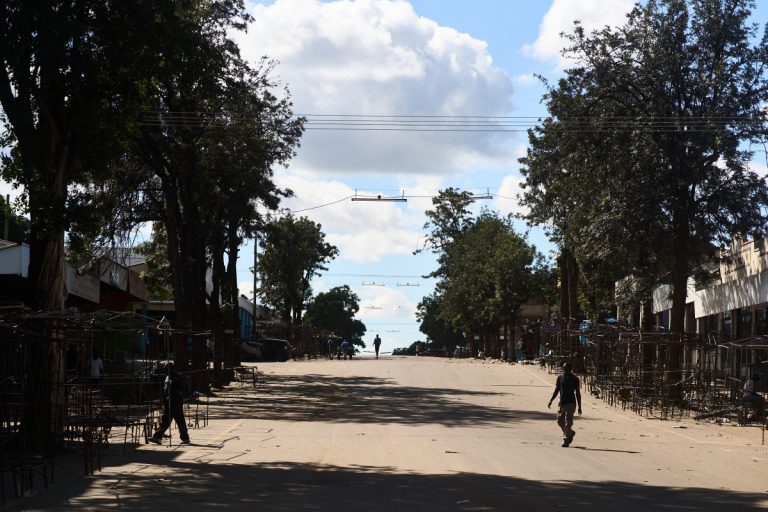
Security forces took control of key cities in Zimbabwe as businesses shut down and streets emptied following a crackdown on planned protests against President Emmerson Mnangagwa.
The demonstrations, called for Monday, were meant to pressure the leader to step down, but authorities issued strict warnings and deployed heavy police presence to prevent any gatherings.
Troops and officers patrolled major urban centers, ensuring people stayed away from planned protest sites. A faction within Mnangagwa’s own ZANU-PF party had urged citizens to march against the president, who has ruled since taking power in a coup eight years ago. However, attempts to gather in Harare were swiftly blocked. A small crowd at President Robert Mugabe Square was quickly dispersed by police, with reports emerging of officers using force against demonstrators.
The movement behind the protests is led by ZANU-PF veteran Blessed Geza, who has been expelled from the party and is now in hiding. He and his supporters want Vice President Constantino Chiwenga, a retired general who played a key role in the 2017 coup that removed Robert Mugabe, to take over leadership. Geza recently declared that efforts to remove Mnangagwa had already begun, signaling further unrest within the ruling party.
Fear spread across the country as rumors of a crackdown circulated. In Harare, shops closed, schools shut their doors, and taxi services halted operations. Even car dealers removed vehicles from display, fearing looting or damage. A witness described the city as completely deserted, with residents too afraid to step outside.
The same scene unfolded in Bulawayo, Zimbabwe’s second-largest city. Normally bustling markets stood nearly empty, and most businesses remained closed. Police officers patrolled on foot, in vehicles, and even on horseback, ensuring no protests took place. Authorities had made it clear that any form of dissent would not be tolerated.
Mnangagwa’s rule has faced criticism over corruption and economic struggles that have left many Zimbabweans in hardship. His government has also been accused of silencing opposition voices. With tensions rising within his own party, the country remains on edge, as some insiders push for a leadership change while security forces tighten their grip on power.