
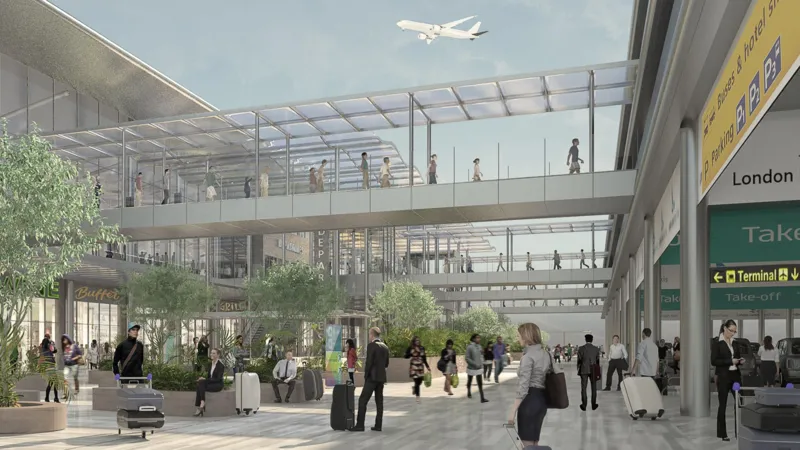
Luton Airport has received government approval for its ambitious expansion plans, aiming to nearly double passenger capacity to 32 million annually by 2043.
The decision, despite objections from the Planning Inspectorate over environmental concerns, has been welcomed by supporters who say it will boost jobs and economic growth.
The expansion includes a second terminal, new taxiways, and upgrades to the existing terminal, increasing capacity from 18 million passengers per year. Luton Rising, the council-owned airport operator, says the project could generate up to £1.5 billion in annual economic activity and create 11,000 new jobs.
Prime Minister Sir Keir Starmer’s spokesperson described the approval as a crucial step in improving national infrastructure, highlighting its potential to drive growth and employment. This comes at a time when Luton faces job losses following the closure of the Vauxhall van plant.
Environmental groups and local campaigners, however, have strongly opposed the expansion. They argue that adding 70,000 flights per year will harm air quality, increase noise pollution, and contradict the UK’s climate goals. Campaigners from LADACAN warn that residents under the flight path already suffer from sleep disruption, and further air traffic would worsen health risks. CPRE, a countryside charity, criticized the government for undermining its own net-zero commitments.
The expansion is part of a broader push by the UK government to back major airport projects. Transport Secretary Heidi Alexander recently signaled support for a second runway at Gatwick, while Chancellor Rachel Reeves has backed Heathrow’s third runway plans.
Airlines are preparing to take advantage of the increased capacity. Wizz Air, Luton’s largest operator, sees strong future demand, though it faces growing competition, with Jet2 recently launching operations from the airport.
Despite concerns, Luton Rising insists it is committed to reducing noise and emissions. With government backing secured, the expansion is set to reshape the airport’s role in UK aviation.