
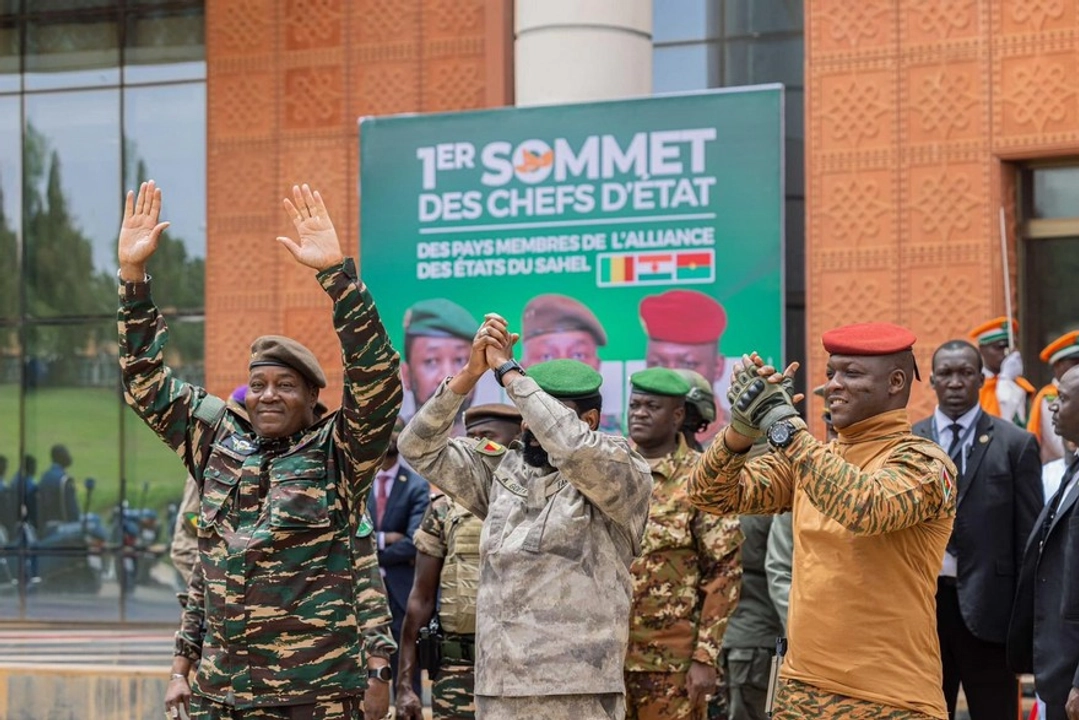
Mali, Burkina Faso, and Niger have recalled their ambassadors from Algeria, escalating regional tensions.
The decision comes after a recent drone incident, although details about the incident are still unclear. This move reflects the strained relationships between these West African nations and Algeria, which have been further complicated by the ongoing Nigerien crisis.
The Nigerien crisis began in July 2023 when President Mohamed Bazoum was detained by the country’s presidential guard, leading to a coup d’état. General Abdourahamane Tchiani proclaimed himself the leader of the National Council for the Safeguard of the Homeland. The Economic Community of West African States (ECOWAS) responded with an ultimatum, demanding the reinstatement of Bazoum, and later imposed sanctions on Niger.
ECOWAS has been actively involved in trying to resolve the crisis, including activating its standby force to restore constitutional order in Niger. However, not all member states agree on the approach, with some, like Cape Verde, advocating for a diplomatic resolution. Cape Verde’s President, José Maria Neves, has expressed concerns about the potential consequences of military intervention, emphasizing the need for a peaceful solution.
Regional tensions are running high, with Mali and Burkina Faso having formed a mutual defense pact in support of the Nigerien junta. The situation is further complicated by the involvement of external actors, including the Wagner Group, a Russian private military company operating in the region. The Wagner Group’s presence has raised concerns among Western nations, which have accused Russia of seeking to expand its influence in Africa.
The recall of ambassadors from Algeria by Mali, Burkina Faso, and Niger is a significant development in the ongoing regional power struggle. As the situation continues to unfold, the international community will be watching closely for any signs of escalation or progress toward a resolution. The African Union has also been involved in efforts to resolve the crisis, with its chairman, Moussa Faki Mahamat, calling for a peaceful solution and urging all parties to prioritize dialogue.
The crisis in Niger has also had economic implications, with the country’s uranium and oil exports being disrupted. The regional instability has also raised concerns about the potential for further coups and instability in the region. As the situation continues to unfold, it remains to be seen how the international community will respond and whether a resolution can be found.