
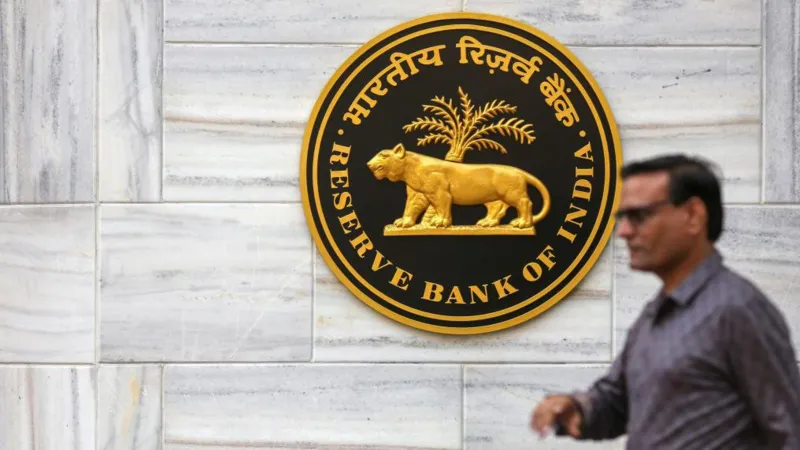
India’s central bank has lowered interest rates in response to rising uncertainty over global trade and a visible slowdown in the country’s economic growth.
The move comes just as new US tariffs, introduced by President Donald Trump, threaten to disrupt exports and investor confidence worldwide.
The Reserve Bank of India (RBI) trimmed the key repo rate by 0.25 percentage points, bringing it down from 6.25% to 6%. This is the second cut this year, following a similar move in February after nearly five years of stable or rising rates. The repo rate is the rate at which the RBI lends money to commercial banks, and changes to it directly affect the cost of loans for businesses and consumers.
India’s growth forecast has been adjusted downward as well. The central bank now expects the economy to grow by 6.5% this year, down from an earlier estimate of 6.7%. The same growth rate is projected for the next financial year. In addition to revising forecasts, the RBI also changed its policy stance from “neutral” to “accommodative,” signaling that it is open to further rate cuts if needed.
RBI Governor Sanjay Malhotra said global trade tensions were beginning to have real consequences. He pointed out that the global economy was showing signs of strain due to rising barriers to trade, which could continue to weigh on India’s performance in the months ahead.
The tariff war launched by the US has had a ripple effect. Indian exports to America will now face additional duties of up to 27%, starting this week. Although the tariffs are not as steep as those imposed on China, Vietnam, and Cambodia, the impact on India could still be significant.
Analysts are adjusting their expectations in light of the new developments. Many now believe the RBI may cut rates by as much as 1% in total over the current cycle. Falling inflation is providing the RBI with some breathing room to support the economy through cheaper credit.
HSBC has estimated that India’s GDP could shrink by up to half a percentage point this year due to slowing exports and reduced inflows of foreign capital. The bank also noted that the government’s ability to respond through public spending is limited because revenue growth has stalled.
India is trying to avoid getting pulled deeper into the trade conflict. Unlike China, which has responded with its own set of tariffs, and the European Union, which is considering similar actions, India has taken a calmer approach. Efforts to reach a trade agreement with the US have picked up pace, with both sides stating the need to finalize a deal soon.
Still, even if a trade deal is reached, India is unlikely to escape the effects of a broader global slowdown. A drop in demand for Indian exports could hurt industries at home, especially if other countries slip into recession.
While India remains the world’s fastest-growing major economy, with a projected growth rate of 6.5%, this is a noticeable decline from the 9.2% recorded in 2023-24. With the global economy on shaky ground and tensions still rising, the road ahead for India is expected to be bumpy.