
Estonia has officially ended the right of non-European Union citizens to vote in local elections, a decision that impacts tens of thousands of Russian residents and signals a shift in the country’s approach to national security and civic participation.
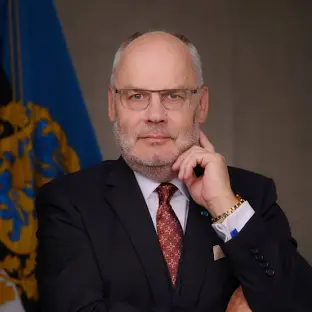
President Alar Karis signed the constitutional amendment into law on Wednesday, following a strong parliamentary vote in March that backed the change. The new legislation bars all “third-country nationals” — non-EU citizens — from participating in local elections. While the law does not mention any specific group, it mainly affects the country’s Russian-speaking population, estimated at around 80,000 people.
Until now, permanent residents who were not Estonian citizens — including long-term Russian residents — could cast their votes in local elections, though not in national ones. The government has now reversed that policy, citing growing security concerns following Russia’s full-scale invasion of Ukraine in 2022.
The president’s office said the change was made to strengthen national unity and reduce potential vulnerabilities. However, it also urged affected residents not to feel rejected by the state or assume that they are seen purely through the lens of risk. The statement emphasized that their presence is still recognized, even though their voting rights have changed.
The move comes amid heightened tensions between Estonia and Russia, as well as between Moscow and other Baltic states like Latvia and Lithuania. All three countries are members of both the European Union and NATO, and have strongly supported Ukraine since the war began. Within this context, Estonia has grown more cautious about the influence of foreign nationals within its borders.
After Estonia broke away from the Soviet Union in 1991, about a third of its population was Russian-speaking. Many of these individuals had arrived from other parts of the Soviet Union during the occupation period and were not automatically granted Estonian citizenship. Gaining citizenship requires passing an Estonian language test, which many have not completed.
Officials say the reform aims to secure the country against potential interference. Critics argue it risks deepening divisions in an already complex multicultural society.
As the geopolitical landscape shifts, Estonia appears to be rethinking its policies on national identity and democratic participation — drawing a clearer line between citizens and non-citizens, even those who have called the country home for decades.