
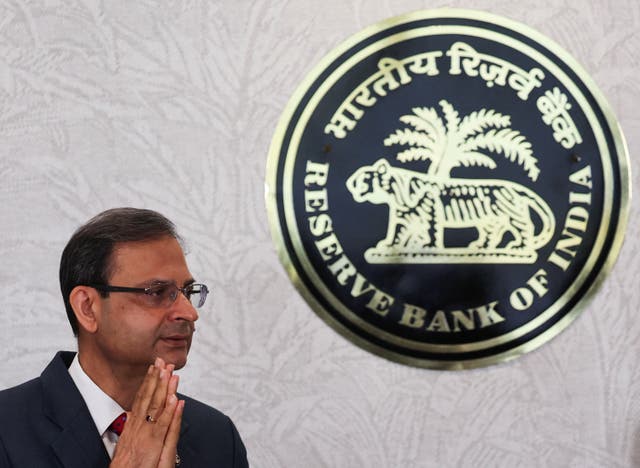
India has lowered its key interest rate to support its economy as new US tariffs take effect.
The Reserve Bank of India (RBI) made the move on Wednesday, cutting the repo rate from 6.25% to 6%. This is the second rate cut this year and comes as the country braces for the fallout from a 26% tariff imposed by US President Donald Trump on Indian goods.
The decision was made as India faces a weaker economic outlook. The RBI revised its growth forecast down from 6.7% to 6.5% for the current financial year and gave the same estimate for the next year. Inflation is expected to ease slightly, dropping from 4.2% to 4%, giving the central bank more space to cut rates further if needed.
The central bank’s monetary policy committee also shifted its stance to “accommodative,” meaning it is open to more rate cuts in the near future. The aim is to keep supporting growth while keeping an eye on inflation. The move reflects rising concern among Indian officials about the pressure from global trade disputes, especially with the US.
India’s economy, the third-largest in Asia, has shown signs of improvement after a slow start to the financial year. But officials admit growth is still below the desired level. The new US tariffs, part of Trump’s wider trade war, are likely to reduce India’s GDP growth by 20 to 40 basis points, according to local economists.
The impact of the tariffs is already being felt. India is among several countries facing trade pressure from the US, with others like China and Vietnam also hit by steep duties. China has responded strongly to the US tariffs, announcing its own measures. India, however, has taken a more cautious approach. Instead of retaliating, it has reduced some import taxes and continued talks to secure a trade agreement with Washington.
Just hours after the US tariffs kicked in, the RBI’s monetary panel voted to cut the interest rate. Officials said the move is aimed at boosting investment and lending at a time when trade tensions are weighing on business confidence.
Economists expect that India’s growth may fall short of the central bank’s target. One estimate puts growth at 6.3% for the fiscal year 2026. The challenge now for the RBI is to strike a balance between supporting growth and keeping the Indian rupee stable, as interest rate cuts can sometimes put downward pressure on the currency.
The decision by India’s central bank reflects growing worries across emerging markets about the global economic environment. With trade tensions rising and economic uncertainty growing, central banks like the RBI are trying to act quickly to protect their economies from a deeper slowdown.