
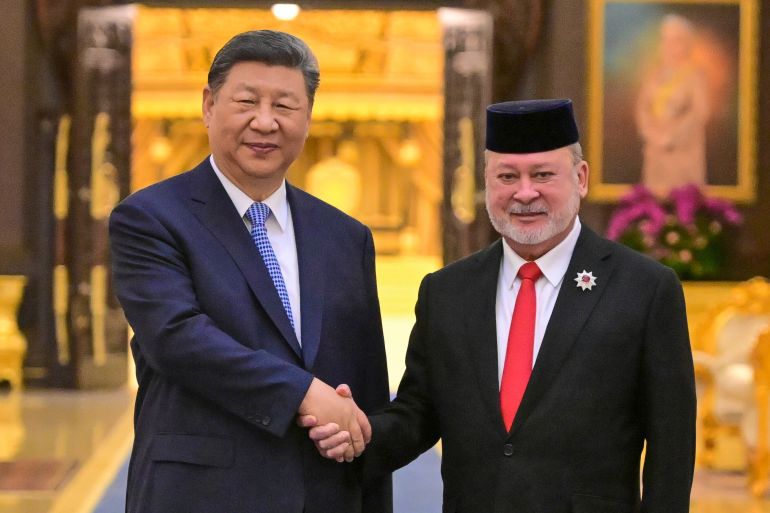
Malaysia has pledged closer cooperation with China as both countries signed dozens of new deals during President Xi Jinping’s official visit, signaling a stronger regional alliance amid growing economic friction with the United States.
The visit saw Malaysian Prime Minister Anwar Ibrahim publicly back China’s role in global trade, emphasizing shared interests in development and stability.
The meeting between the two leaders took place in Kuala Lumpur on Wednesday and concluded with the signing of 31 agreements. These cover a wide range of areas including artificial intelligence, railway expansion, digital economy initiatives, student exchanges, tourism, and agricultural exports such as Malaysian coconuts to China.
The timing of the visit is crucial. China is seeking to strengthen its presence in Southeast Asia as the US imposes or threatens new trade restrictions. While the Trump administration argues its trade moves are meant to protect American industries, Beijing is positioning itself as a consistent and open trade partner. The Malaysian government appears to support this narrative, framing its relationship with China as both economically beneficial and essential for national development.
At a formal state banquet, Anwar and Xi made their stance clear, speaking in favor of free-flowing trade and regional cooperation. Without directly naming the United States, both leaders warned of growing economic barriers and the impact of protectionist policies on global progress. The Malaysian prime minister said his country’s alignment with China is about safeguarding its economy and ensuring long-term prosperity.
The agreements also reflect China’s growing influence in the region, not only as an investor but also as a technology and infrastructure partner. Projects under discussion could reshape parts of Malaysia’s transportation and digital landscape, while student and tourism exchanges aim to deepen people-to-people ties.
As global power struggles continue to reshape alliances, Malaysia’s firm public support for China stands out. With the US and China locked in a long-term economic rivalry, this visit suggests that some nations in Southeast Asia are ready to place more trust in Beijing’s approach, at least when it comes to trade and development.