
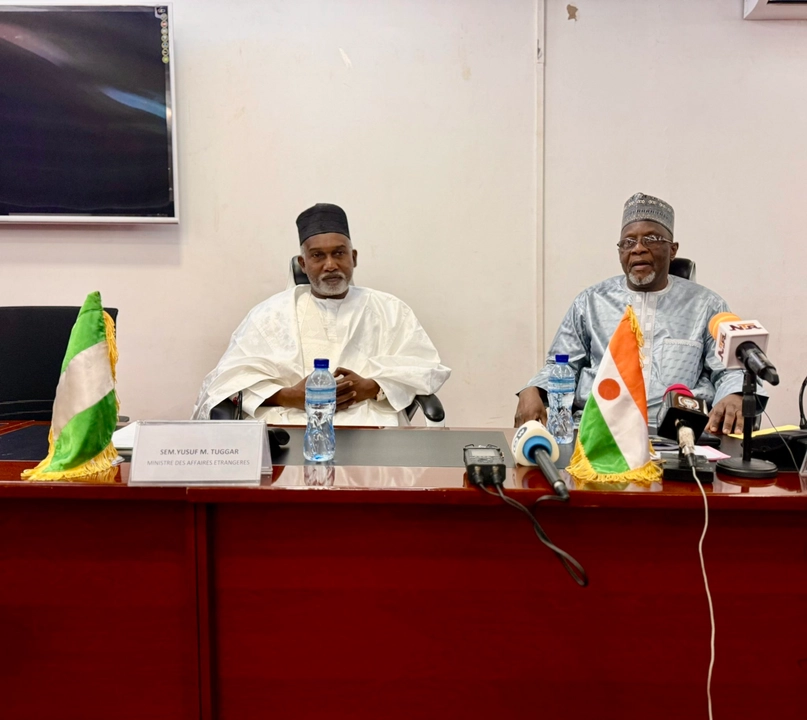
Nigeria and Niger have resumed high-level diplomatic talks, aiming to address shared security threats and rekindle cooperation following months of tension after the July 2023 military coup in Niger.
In a rare visit, Nigerian Foreign Minister Yusuf Tuggar traveled to Niamey to meet his counterpart, Bakary Yaou Sangare, marking only the second time a senior Nigerian official has visited Niger since the coup. Their meeting focused on border security, terrorism, and joint infrastructure projects, signaling cautious steps toward rebuilding trust.
The discussions took place amid a backdrop of strained relations. Nigeria, along with other West African nations, had condemned the coup and continues to call for the release of Niger’s ousted President Mohamed Bazoum, who remains in detention at the presidential residence. Despite these tensions, both ministers reportedly held talks in a cordial atmosphere, discussing the serious threats posed by terrorist activity along their shared border. Officials said the persistent insecurity has been a major barrier to development efforts on both sides.
Security was not the only topic on the table. The two sides also reviewed key economic initiatives, including the much-anticipated railway connecting Kano and Katsina in Nigeria to Maradi in Niger. The project, slated to open in 2026, is seen as a vital trade route that could boost regional commerce. They also spoke about progress on the Trans-Sahara Highway and the proposed Trans-Saharan gas pipeline, both intended to link the region more effectively and attract investment.
Beyond the projects, customs and taxation policies were reviewed as both countries look to streamline cross-border trade. These efforts are particularly significant as Niger, along with Burkina Faso and Mali, recently withdrew from the Economic Community of West African States (ECOWAS), citing its failure to curb terrorism in the Sahel. The three countries have since formed their own security alliance, the Alliance of Sahel States.
Accusations have added further strain to Nigeria-Niger relations in recent months, with Niger alleging that Nigeria supports foreign elements aiming to destabilize its government—a claim Abuja firmly denies. Nigerian authorities also rejected suggestions that French troops stationed in northern Nigeria were preparing to interfere in Niger’s affairs.
Despite the tension, this meeting between the two foreign ministers signals a willingness to talk and possibly shift the dynamic from confrontation to cooperation. With shared threats and mutual interests in play, both nations appear to be testing the waters for a more stable and productive relationship.