
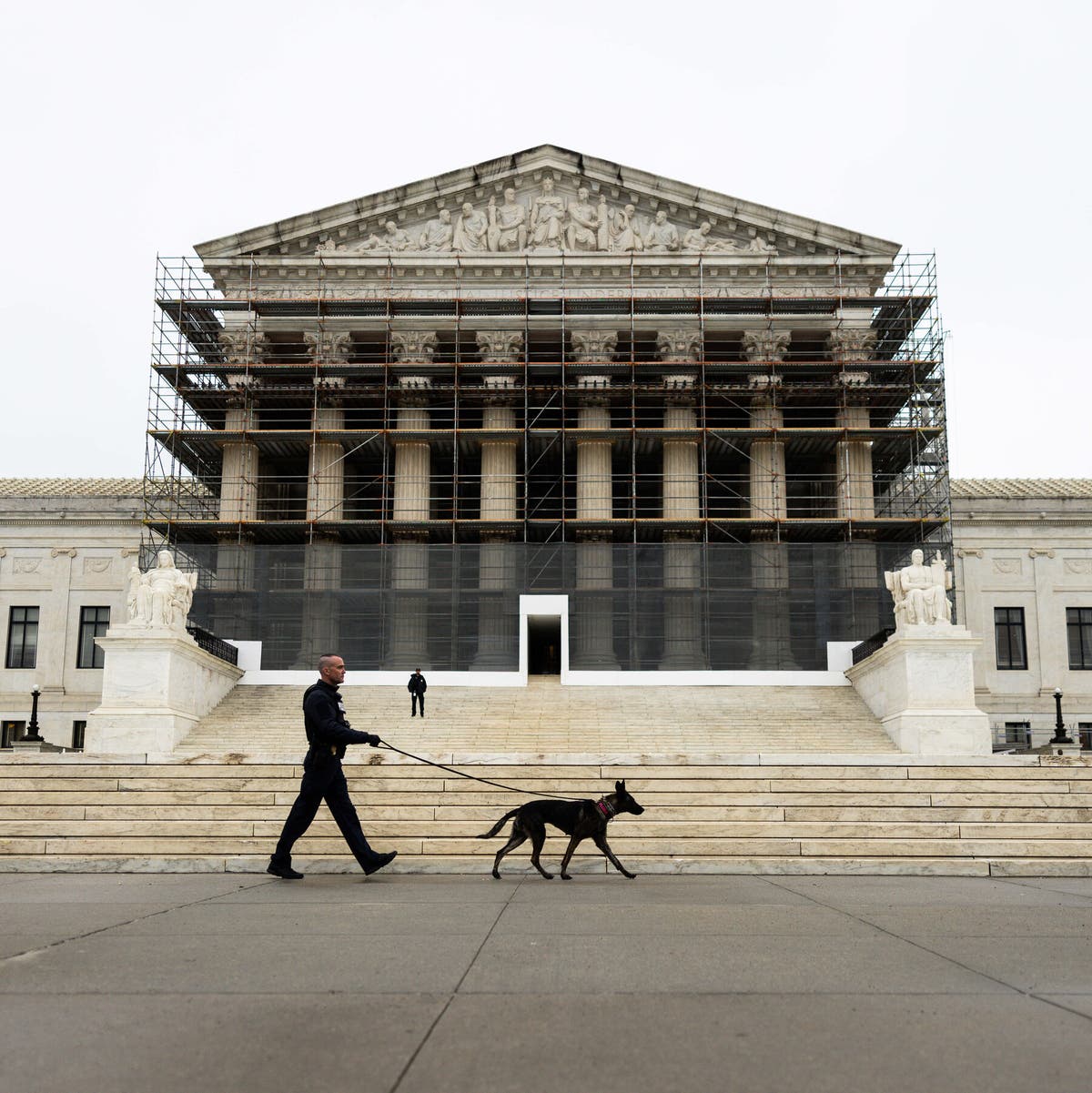
The United States Supreme Court has temporarily stopped the deportation of a group of Venezuelan migrants who were facing removal under a little-used wartime law.
The decision came early Saturday following an emergency request from civil rights lawyers who rushed to prevent more than 50 people from being flown out of the country.
The deportations were linked to a proclamation issued by President Donald Trump last month, invoking the Alien Enemies Act—a law dating back to 1798 that gives the president power to deport nationals from countries the U.S. deems hostile. It has been rarely applied in American history, previously used only during officially declared wars. In this case, the administration argues the migrants are affiliated with Tren de Aragua, a violent Venezuelan gang.
The situation escalated at the Bluebonnet Detention Center in Anson, Texas, where immigration officers reportedly began issuing deportation notices to detainees late Friday. In response, the American Civil Liberties Union (ACLU) filed emergency appeals in three separate courts within hours, beginning with a federal court in Abilene. When that court denied relief, they quickly turned to the U.S. Court of Appeals in New Orleans and ultimately to the Supreme Court.
The justices granted a temporary pause on removals, issuing a brief order that prevents any of the migrants from being deported for now. The ruling did not explain the court’s reasoning, which is typical for emergency decisions. However, Justices Clarence Thomas and Samuel Alito dissented.
The Venezuelans were reportedly already being loaded onto buses, likely en route to a deportation flight to El Salvador, when the emergency appeal reached the Supreme Court. The ACLU had already managed to stop similar deportations in other cities such as New York, Denver, and Brownsville through lower court rulings earlier this month.
The legal challenge comes in the wake of a recent Supreme Court decision requiring that anyone detained under the Alien Enemies Act must be allowed to contest their removal in the district where they are being held. That ruling has forced immigration lawyers to scramble to file lawsuits in numerous districts across the country. The ACLU is now asking a federal judge in Washington to order nationwide notice requirements before deportations under this law can proceed.
During a hearing on Friday night in Washington, ACLU attorney Lee Gelernt told Judge James Boasberg that the organization is prepared to file protective lawsuits in each of the over 90 federal judicial districts to shield potential deportees from being removed without a proper hearing. Meanwhile, a Justice Department lawyer claimed that no deportation flights were scheduled at that moment and promised that detainees would be given at least 24 hours’ notice before removal.
Despite those assurances, the judge questioned whether such notice could be guaranteed without a formal order. For now, the Supreme Court’s temporary halt offers a brief window of relief for the affected migrants while legal battles over the unusual use of the wartime statute continue.