
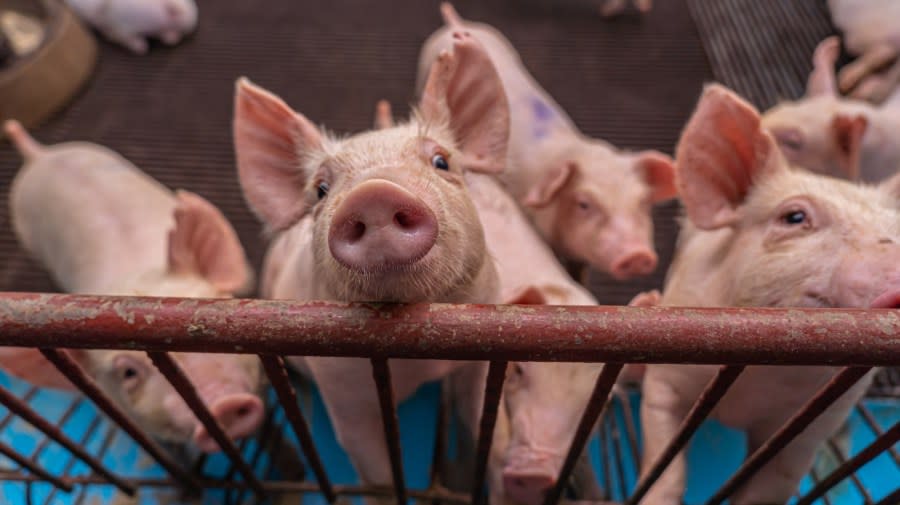
China has canceled its largest U.S. pork order in five years, dealing a significant blow to American farmers amid escalating trade tensions between the two nations. The cancellation involves 12,030 metric tons of American pork, valued at millions of dollars, according to the U.S. Department of Agriculture.
This move represents the largest cancellation of U.S. pork orders since the COVID-19 pandemic disrupted global supply chains in 2020. China, which produces nearly 50% of the world’s pork, is a crucial market for U.S. pork exports, having imported 475,000 tons of U.S. pork worth over $1.1 billion in 2024.
The cancellation is expected to have far-reaching implications for U.S. pork producers, particularly in states like Iowa, which accounts for 35.5% of U.S. hog sales, valued at $11 billion in 2022. Dexter Roberts, a U.S.-based senior fellow at the Atlantic Council’s Global China Hub, notes, “This is a targeted response from China to hurt parts of the U.S. that are most vulnerable.”
U.S. pork exports to China have already declined significantly, with purchases dropping 72% from the prior week. Analysts expect American pig farmers to feel the pinch, despite not relying heavily on the Chinese market. Karl Setzer, U.S. Ag, warns, “If we see another round of large-scale cancellations next week, I’d expect a stronger market reaction.”
The cancellation is seen as a direct response to the trade conflict between the U.S. and China, with China imposing retaliatory tariffs on U.S. pork imports. The U.S. Meat Export Federation notes that U.S. pork imports face a comprehensive tariff of up to 172%, including tariffs imposed during the initial trade war in 2018.
Altin Kalo, chief economist at Steiner Consulting Group, believes the biggest impact of the tariffs will be potential damage to the U.S. economy. “The tariffs on Chinese goods have led to retaliatory measures from China, including tariffs on U.S. pork, increasing the cost of U.S. pork imports,” he said.
As the trade war continues, U.S. farmers and agricultural exporters are growing increasingly concerned about the long-term impact on their industry. With China looking to diversify its pork imports, Brazil and other countries may benefit at the expense of U.S. pork producers.