
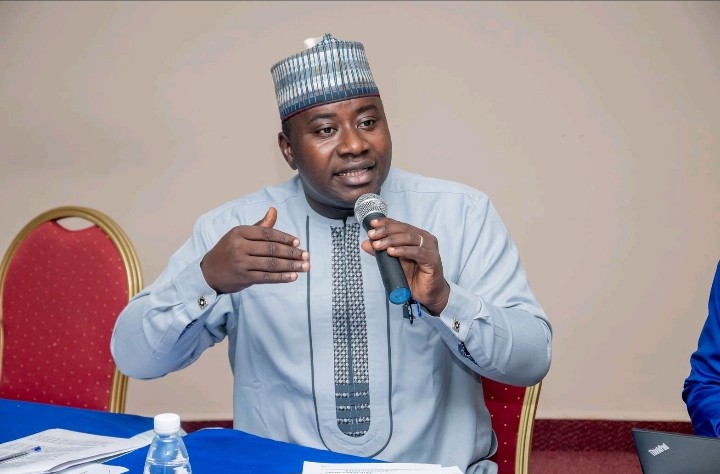
The 4th Deputy Speaker of the ECOWAS Parliament, Hon. Billay G. Tunkara has emphasised the need for a thorough assessment of the implications of the withdrawal of the Sahel States (Mali, Burkina Faso, and Niger).
“The withdrawal of Burkina Faso, the Republic of Mali, and the Republic of Niger marks an unprecedented fracture,” he said. “These countries, strategic and demographic pillars, have chosen to leave the common ship. This choice, effective since January, threatens not only our achievements but also the future of 400 million citizens.”
He gave this charge at the Delocalised meeting of ECOWAS Parliament, which gets underway today, Monday, April 28, 2025, in Banjul, The Gambia. The meeting with focus on Regional Integration and Challenges was convened by Joint Committee on Political Affairs, Peace, Security, and African Peer Review Mechanism (APRM); Legal Affairs and Human Rights; Trade, Customs, and Free Movement; and Social Affairs, Gender, Women Empowerment, and Persons with Disabilities.
The withdrawal has significant implications for the region, including potential economic, security, and humanitarian consequences. “Politically, ECOWAS loses 20% of its members,” Tunkara noted. “This erosion, in addition to weakening our voice on the international stage, risks encouraging other states to doubt the community project, thus undermining our credibility as a model of African integration.”
The Joint Committee will assess the multidimensional impacts of the withdrawal and explore ways to maintain pragmatic cooperation with the withdrawing countries. “We must come away with concrete proposals for the future, notably: a common understanding of the challenges, bold recommendations to maintain dialogue with the withdrawing countries, and reform proposals to consolidate ECOWAS,” Tunkara said.
The meeting aims to strengthen ECOWAS’ resilience and identify structural reforms to prevent other states from following suit. “ECOWAS must evolve to remain relevant,” Tunkara emphasized. “This involves more inclusive integration, more transparent governance, and concrete projects that improve the daily lives of citizens.”
Tunkara concluded by urging participants to work with courage and creativity, guided by the spirit of fraternity that founded the community. “May this meeting in Banjul mark the beginning of a renaissance,” he said. “A renaissance where each state, each citizen, recognizes themselves in this common project. A renaissance where cooperation triumphs over selfishness and where hope prevails over pessimism.”