
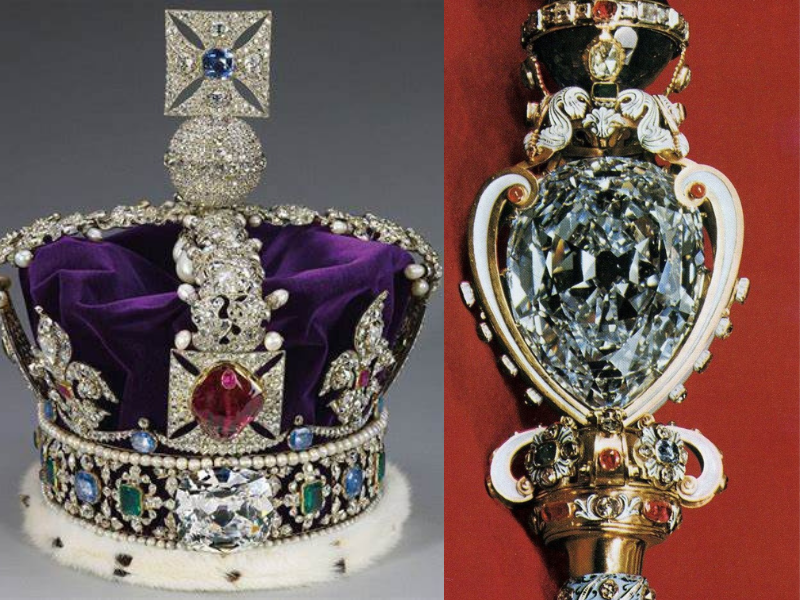
South Africa is calling for the return of the world’s largest diamond, the Cullinan, which was mined in the country over a century ago and is now part of the British crown jewels.
The renewed push for its return comes amid growing global scrutiny of colonial-era treasures held by former imperial powers.
The Cullinan diamond, originally a 3,100-carat gemstone discovered near Pretoria in 1905, was later cut into nine major stones and about 100 smaller ones. The largest cut, Cullinan I—known as the Star of Africa—is set in the royal scepter that King Charles will carry during his coronation. The Cullinan II is set in the Imperial State Crown. Both are displayed in the Tower of London, alongside other crown jewels.
South African activists, legal professionals, and citizens have launched a petition calling for the diamond’s return. Thousands have signed, arguing the gem is part of South Africa’s heritage and should be housed in a national museum. Supporters of the campaign say the diamond was taken during colonial rule, and that those who gifted it to the British royal family in 1907 did not have rightful ownership.
The Cullinan was presented to King Edward VII two years after its discovery, as a political gesture to ease tensions after the Second Boer War, which had ended in 1902. During that time, the British had absorbed the Dutch-led South African Republic into its empire. Critics argue that the offering of the diamond was not an act of goodwill by a sovereign people, but one made under the shadow of imperial dominance.
Calls for the diamond’s return reflect a broader conversation about repatriation and the legacy of colonialism. Many in South Africa see the Cullinan as a national symbol that was stripped away during a time of exploitation. They argue that reclaiming such treasures is part of a larger effort to recover historical identity and dignity.
The debate echoes similar demands from other nations. India has repeatedly asked the British government to return the Kohinoor diamond, a 105-carat gem with its own controversial history. That diamond, mined centuries ago in what is now India, ended up in British hands during the 19th century and has since been a source of diplomatic tension.
Although the British royal family chose not to use the Kohinoor in the coronation, opting instead for diamonds cut from the Cullinan, this decision has done little to ease concerns. For many, replacing one contested gem with another has only reignited anger over imperial acquisitions.
New revelations about Britain’s royal past have added to the controversy. Recent research has uncovered evidence that King Charles has direct ancestors who were involved in the transatlantic slave trade. Historical records show that one of his forebears, Edward Porteus, owned a plantation in colonial Virginia and received enslaved Africans in the late 1600s.
Calls for the return of treasures taken under colonial rule highlight unresolved historical grievances. For countries like South Africa, the question is not just about a diamond, but about restoring what was lost during a painful chapter of history.