
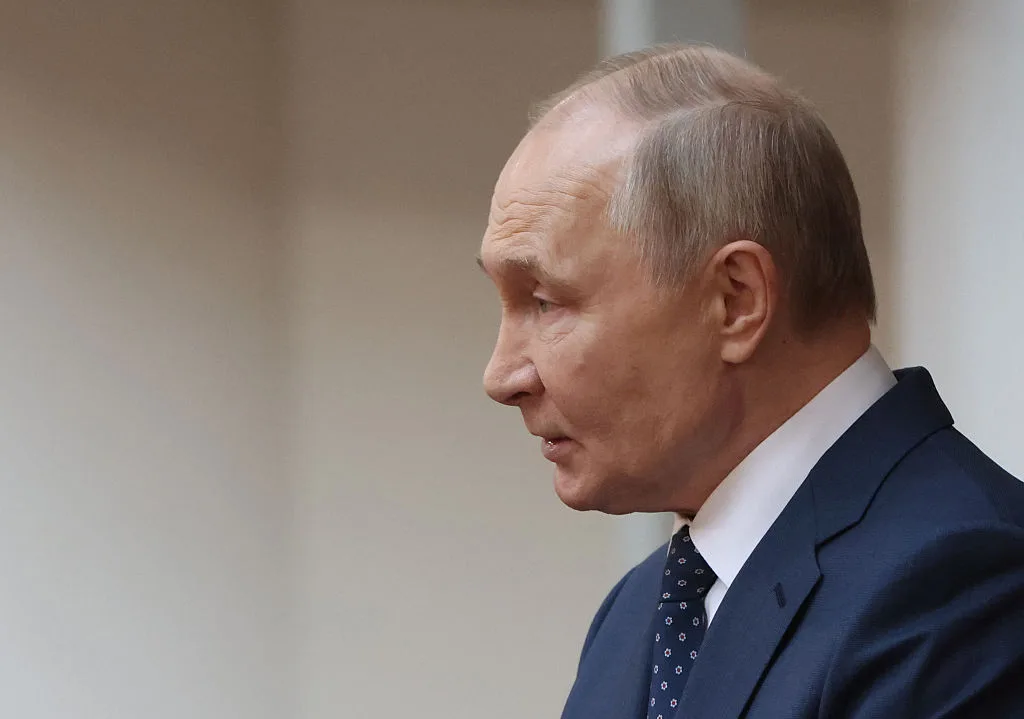
Tensions between Russia and NATO reached new heights as President Vladimir Putin issued a sharp warning to Western nations, suggesting the possibility of nuclear retaliation if they continue their military support for Ukraine.
The latest statement has caused alarm across Europe and beyond, reigniting fears of a wider global conflict.
This warning comes after several NATO members, including the United Kingdom, France, and Germany, backed a proposal for a multinational force to support Ukraine should Russia resume its aggression despite ceasefire talks. In response, Russian officials accused these countries of interfering and labeled them as direct participants in the war. Moscow has made it clear that it views any foreign military presence in Ukraine as a threat to its national security.
Putin’s comments were delivered through state media channels, where top Russian broadcasters claimed that military deployments from NATO would not go unpunished. The message was blunt—if NATO forces enter Ukrainian territory or help strike Russian positions, they could face consequences unlike anything seen before. Analysts believe this is the Kremlin’s attempt to pressure the West into stepping back from its involvement.
The statement came just days after Russia conducted missile tests from a submarine in the Pacific Ocean. The test included the launch of Kalibr cruise missiles capable of traveling 700 miles. One missile reportedly struck an underwater target, while another was aimed at a remote coastal area. Though no casualties or damage were reported, the timing of the drills sent a clear message.
Putin has maintained that Western countries are crossing red lines by supplying Ukraine with long-range weapons and intelligence. The Kremlin argues that these actions make NATO countries legitimate targets if used to strike Russian facilities. This kind of rhetoric has become more common since the escalation of the war in late 2024, especially after long-range weapons from the U.S. and U.K. were reportedly used in Ukrainian strikes.
While there is no confirmation that Russia plans to use nuclear weapons imminently, its repeated threats have raised concerns within NATO. Leaders are now forced to balance their support for Ukraine with the risk of provoking a direct confrontation with Russia. Military experts say that while a full-scale nuclear conflict remains unlikely, the possibility of tactical nuclear weapons being used in a localized setting can no longer be dismissed.
What happens next will depend on how NATO chooses to respond. Some countries may strengthen their support for Ukraine, seeing Russia’s threats as an attempt to intimidate. Others may push for more cautious diplomacy. For now, the situation remains tense, and the world is watching closely as a fragile peace hangs in the balance.