
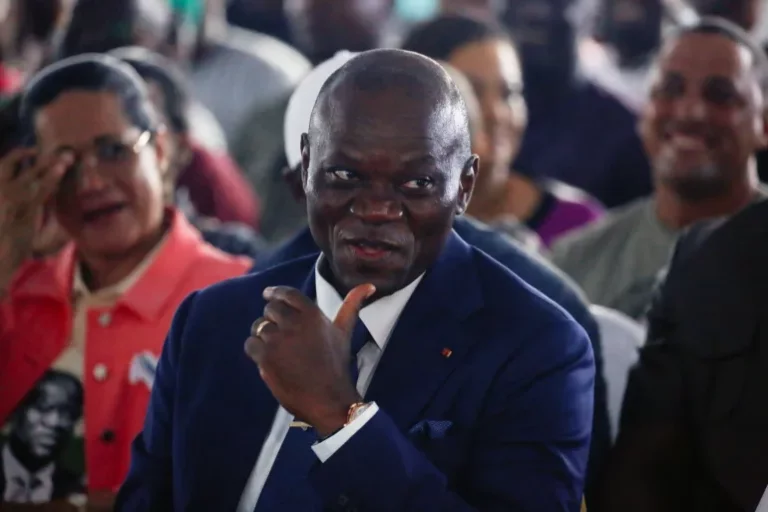
Gabon has officially welcomed a new president, Brice Oligui Nguema, who took the oath of office on Saturday following a sweeping victory in last month’s election.
The ceremony took place at the Angondje Stadium near Libreville, drawing thousands of supporters and a notable list of international leaders. This moment marks a new chapter for the oil-rich Central African nation, coming less than two years after Oligui led a coup that ended over five decades of Bongo family rule.
The new president was sworn in after receiving nearly 95 percent of the vote, securing a clear mandate from voters. His rise to power began in August 2023, when he removed then-President Ali Bongo from office and pledged a transition toward civilian rule. Since then, Oligui has overseen a temporary government focused on stability and reform. Saturday’s inauguration officially moves Gabon out of its transitional phase and into a new political era.
Supporters began gathering early in the day, many wearing clothes printed with Oligui’s image. The event, held in a stadium built with Chinese support, was free for the public and attended by leaders from over 20 African countries. Traffic clogged the streets around the venue, as citizens and officials prepared for the arrival of foreign guests. The atmosphere in Libreville reflected both celebration and curiosity about what lies ahead.
Oligui now faces serious challenges as he begins his first full term. Gabon’s economy, though supported by oil exports, is weighed down by a large national debt. The country’s infrastructure, particularly electricity and roads, is in poor shape. Power cuts are common, and transport networks struggle to meet the needs of a growing population. Youth unemployment remains high, raising concerns about long-term stability and development.
In recent months, Oligui has presented himself as a leader focused on rebuilding. He launched several construction projects and promised stronger action against corruption. Many in Gabon are hoping these efforts will continue under his official leadership and bring visible improvements. He also spoke of the need to move beyond old systems of power and give more people a voice in shaping the country’s future.
The transition from military leader to elected president puts Oligui in a unique position. He has the opportunity to lead with a fresh start, but also the responsibility to deliver real change. Expectations are high, and the coming months will be closely watched both at home and abroad. Citizens are waiting to see if the promises made during the transitional period will turn into lasting progress.
Gabon’s new leadership brings hope for renewal, but also raises questions about how quickly the country can fix deep-rooted problems. As Oligui begins his term, all eyes are on the steps he takes next.