
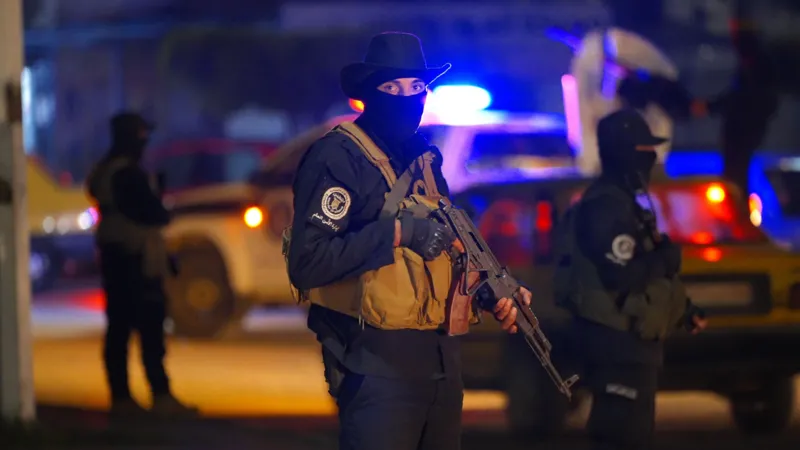
A wave of deadly violence in Syria’s coastal area has left hundreds of Alawite civilians dead, as new details emerge about the role of armed civilians and government forces during the attacks.
A man arrested for taking part in the killings claims he and others were guided by Syria’s General Security forces during the operation, raising serious questions about the chain of command and accountability.
The deadly events unfolded in early March in the village of Sanobar, located near the Mediterranean coast. Armed civilians, responding to clashes between former regime loyalists and new government forces, entered the area. Their stated aim was to confront former regime fighters. However, the violence quickly turned into what many survivors are calling targeted killings of Alawite civilians.
According to one of the detained fighters, a group of civilians, including himself, arrived in Sanobar and acted under the watch of security officers. The claim suggests that government forces were present and gave instructions, though they allegedly advised against harming innocent people. Despite this, the accused was caught on video shooting an unarmed elderly man, a well-known resident of the village. The footage contradicts his claim that the victim had been armed.
The Syrian military has denied any official coordination with the civilian fighters. But conflicting accounts from the ground raise doubts. Residents and survivors have described a chaotic scene where various militias, armed civilians, and even foreign fighters took part in the violence. Many of these groups are linked to the new Syrian army but appear to act without clear command structures.
Witnesses reported that the violence began a day after former regime forces attacked new government positions along a nearby highway. In response, allied fighters were called in. What followed was an outbreak of unchecked rage, as armed groups stormed villages suspected of harboring Assad loyalists. Sanobar became one of the hardest-hit areas. Around 200 people were killed in the village alone over just a few days.
The victims were mostly civilians with no role in the ongoing conflict. Families were unable to bury their loved ones for days, too afraid to come out of hiding. In one case, the body of a farmer remained outside his house for three days while his family sheltered nearby in silence, fearing for their lives.
Now, the village carries deep scars. A mass grave sits near the road. Survivors, mostly women and children, live with the trauma of what happened. Many still refuse to speak publicly, worried about retaliation or renewed violence.
Rights groups estimate that nearly 900 civilians were killed during the surge in violence across Syria’s coastal region in March. Most of the victims belonged to the Alawite minority, a group linked to former President Bashar al-Assad. The recent attacks have sparked fears of further sectarian conflict, as the country struggles to stabilize after years of war and a shift in political power.
The Syrian government has not yet conducted public investigations into the March killings, and no formal charges have been announced against the larger groups involved. However, the arrest of Abu Khalid and the release of video evidence may bring more attention to the need for justice and accountability in regions still dealing with unrest and divisions.