
When the Catholic Church selects a new pope, millions of people across the world fix their eyes on a small chimney atop the Sistine Chapel.
This chimney becomes the center of global attention, sending up smoke that tells the world whether a new pope has been elected. Black smoke means no decision yet. White smoke means a pope has been chosen.
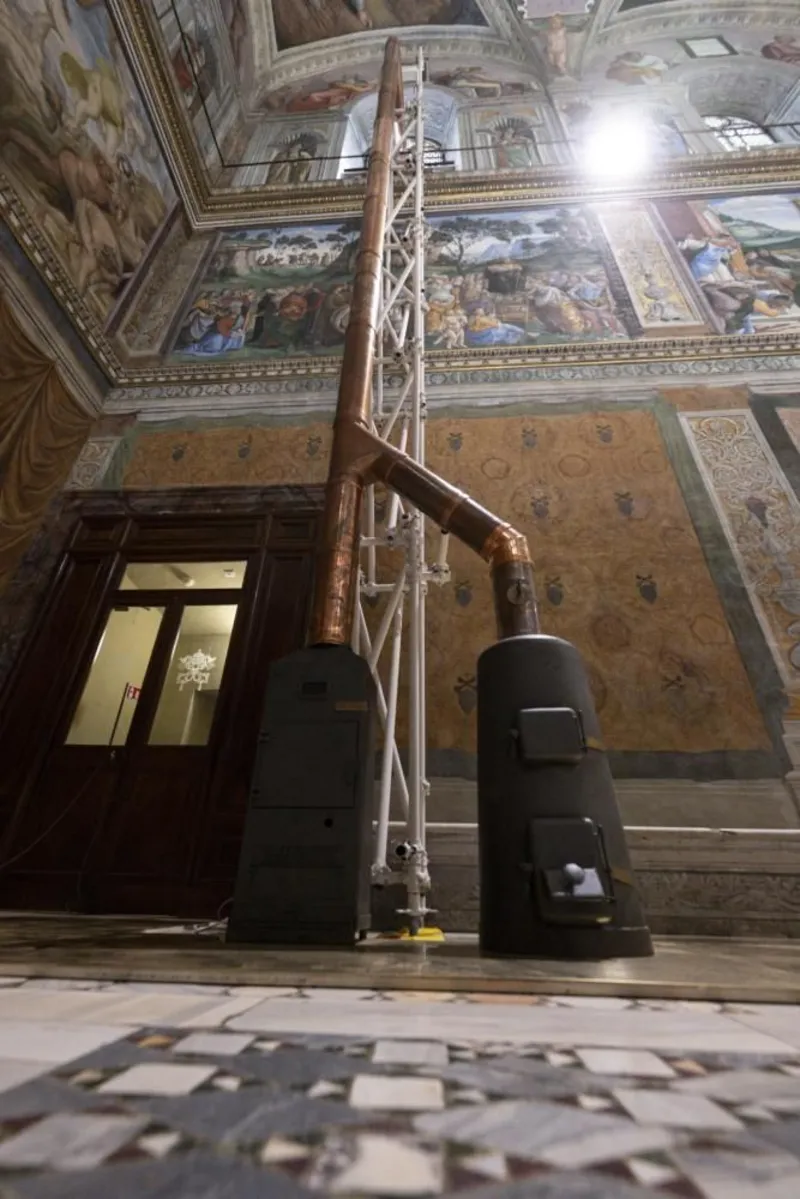
What most viewers never see is the detailed planning behind this centuries-old tradition. Hidden inside the Sistine Chapel is a carefully assembled system designed to produce unmistakable smoke signals. It includes custom-made stoves, a specially engineered flue, tested smoke mixtures, and even a standby team of Vatican firefighters.
With Pope Francis’s passing on Easter Monday at the age of 88, the focus has shifted to the upcoming conclave. The Vatican has announced that on May 7, cardinals will gather at St Peter’s Basilica for a special Mass, before entering the Sistine Chapel to begin the secretive voting process to elect a new pope.
The tradition of burning paper ballots during the election dates back to the 1400s. It began as a way to ensure that votes couldn’t be tampered with. Eventually, the Vatican added smoke signals to alert the outside world without revealing any inner details of the vote. Even now, in the digital age, the Church continues this ancient method.
The symbolism runs deep. Smoke has long represented communication with the divine. In many religious traditions, smoke from sacrifices or incense has symbolized prayer rising to heaven. In this case, it connects the modern Catholic Church with its historical roots. For many gathered in St Peter’s Square, the rising smoke makes them feel part of the moment, even though the vote itself is private.
The practical side is anything but simple. Inside the chapel, technicians install two stoves: one for burning the cardinals’ ballots and one to create the smoke. A metal pipe runs from the stoves through a narrow chimney up to the chapel roof, ending in the iconic chimney seen around the world. Fire crews secure the flue, scaffolding is erected, and smoke rehearsals are conducted before the conclave begins.
Because the Sistine Chapel is over 500 years old and filled with priceless artwork, every installation must be done with extreme care. Engineers take special steps to avoid damaging the building. Each pipe joint is sealed, and every part is tested to prevent failure. Firefighters remain close in case anything goes wrong. A technical mistake here isn’t just local—it would be noticed by the entire world.
To produce visible smoke, experts prepare specific chemical mixtures. These include compounds that produce either dark or light smoke when burned. The formulas have to be precise to ensure the color is unmistakable and visible even in daylight. These mixtures are stored and used with caution to avoid any safety issues.
The entire system is temporary. It is assembled days before the conclave and removed once the new pope is announced. For a few days, this carefully built setup becomes the world’s most-watched chimney, where a puff of smoke signals a major moment in Church history.
In a world of instant updates, the Vatican’s ancient smoke signal still holds power—part ritual, part engineering, and completely unique.