
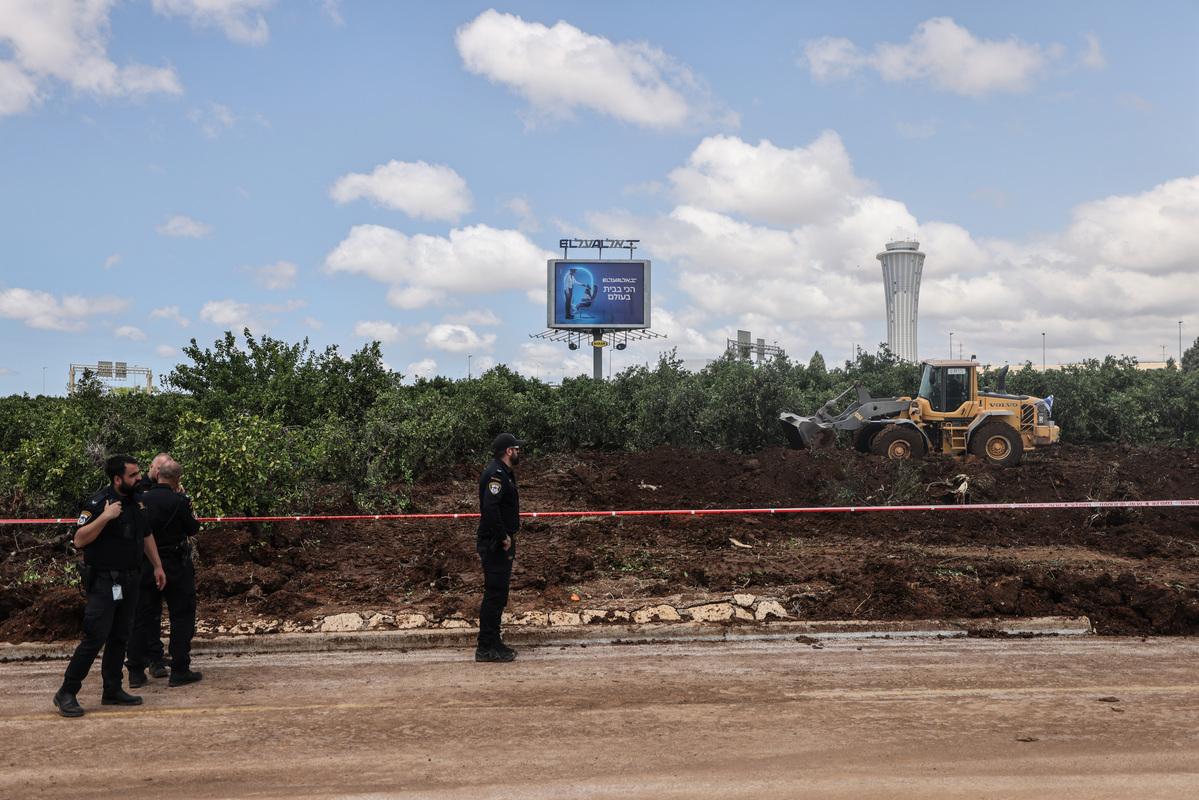
Flights in and out of Israel came to a sudden halt on Sunday after a missile launched by Yemen’s Houthi forces landed close to Ben Gurion International Airport, near Tel Aviv.
The strike prompted immediate cancellations by several international airlines, leaving travelers stranded and sparking fresh safety concerns.
The incident occurred during the early hours of the day, sending a column of smoke into the sky and causing panic inside the airport terminal. Although the missile did not strike the airport directly, the proximity of the impact was enough to trigger a rapid response from airlines and airport authorities.
Major carriers including Delta, United, Lufthansa, Air France, and ITA quickly suspended their flights. Delta cancelled both its Sunday departure from JFK to Tel Aviv and the return leg on Monday. United halted its twice-daily service between Newark and Tel Aviv. Lufthansa and its group airlines—Swiss, Brussels, and Austrian—stopped operations to and from Israel until Tuesday. ITA extended its cancellation window through Wednesday, while Air France canceled its Sunday flight and shifted passengers to Monday.
Flights operated by TUS Airways between Cyprus and Israel were also cancelled, along with Air India’s service from New Delhi. Ryanair paused its Sunday flights but indicated a potential return to service on Monday. Wizz Air followed with similar steps. Meanwhile, some carriers like Aegean, flydubai, and Ethiopian continued their scheduled flights.
Travelers at Ben Gurion were caught off guard. Screens in the terminal showed a long list of cancellations, especially among European airlines. Michael Sceemes, a French passenger, expressed frustration over the lack of options to return home, noting that all flights by Lufthansa, Swiss, and Brussels Airlines had been called off.
Despite the scare, Israeli airline El Al maintained its operations and announced special “rescue flights” from Larnaca and Athens to bring stranded passengers back home. The flights were priced at $99 and $149, aiming to provide quick solutions amid the disruption. Shares of El Al rose 7 percent, and Israir gained 4.1 percent as they briefly became the only active carriers serving the country.
Ben Gurion Airport was fully operational within half an hour after the strike. Authorities confirmed that the missile had hit a road near the airport but had not damaged any aviation infrastructure.
The Houthi military wing later confirmed it had targeted the airport, claiming it was unsafe for air travel. The group, which began launching strikes toward Israel and interfering with Red Sea shipping in late 2023, has cited Israel’s military campaign in Gaza as the reason behind its actions.
Israeli Prime Minister Benjamin Netanyahu responded to the missile attack with a warning of further military action, stating that Israel had struck the Houthis before and would do so again.
As tensions rise, the incident raises questions about the security of international air travel in the region and whether more airlines might suspend services in the days ahead.