
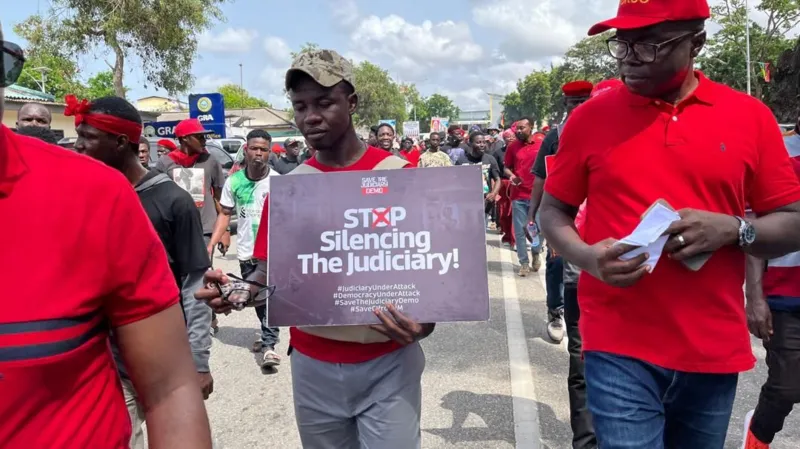
Hundreds of protesters filled the streets of Accra on Monday, voicing anger over the suspension of Ghana’s Chief Justice Gertrude Torkornoo.
Dressed in red and black, the crowd accused President John Mahama of overstepping his authority and undermining the country’s democratic system.
The protest was sparked by Mahama’s decision to remove the chief justice from her position last week. This marks the first time in Ghana’s history that a sitting chief justice has been suspended. According to the president, he acted after receiving three petitions accusing Torkornoo of misconduct. The specific claims have not yet been made public.
The demonstration was led by the main opposition party, the New Patriotic Party (NPP), which had supported Torkornoo’s appointment two years ago under then-president Nana Akufo-Addo. Protesters demanded her immediate reinstatement and accused the current administration of using political power to target the judiciary.
Alongside the NPP, three smaller opposition groups joined the protest. The Ghana Bar Association, the country’s leading legal body, also voiced disapproval last week, calling the suspension unconstitutional and urging the president to reverse it.
Not all legal experts agree with the opposition. Some argue that the president acted within his constitutional powers, which include the ability to suspend or dismiss public officers, including the chief justice, in cases involving serious misconduct or incompetence. Supporters of Mahama argue that the president was simply responding to complaints raised by citizens.
Still, many Ghanaians remain unconvinced that the correct legal procedures were followed. Protesters like Serwaa Akoto and Charles Oteng expressed fears that the independence of the judiciary is under threat. They say this is more than just a legal matter—it’s about protecting democratic checks and balances.
Torkornoo, who is Ghana’s third female chief justice, has faced increasing criticism from the ruling National Democratic Congress for rulings in politically sensitive cases. She has denied any bias in her decisions. Now, she is expected to appear before a committee to respond to the allegations.
The tension between the judiciary and the executive branch has thrown Ghana’s political scene into turmoil. Whether the suspension stands or is overturned, the public reaction shows that the fight over judicial independence is far from over.