
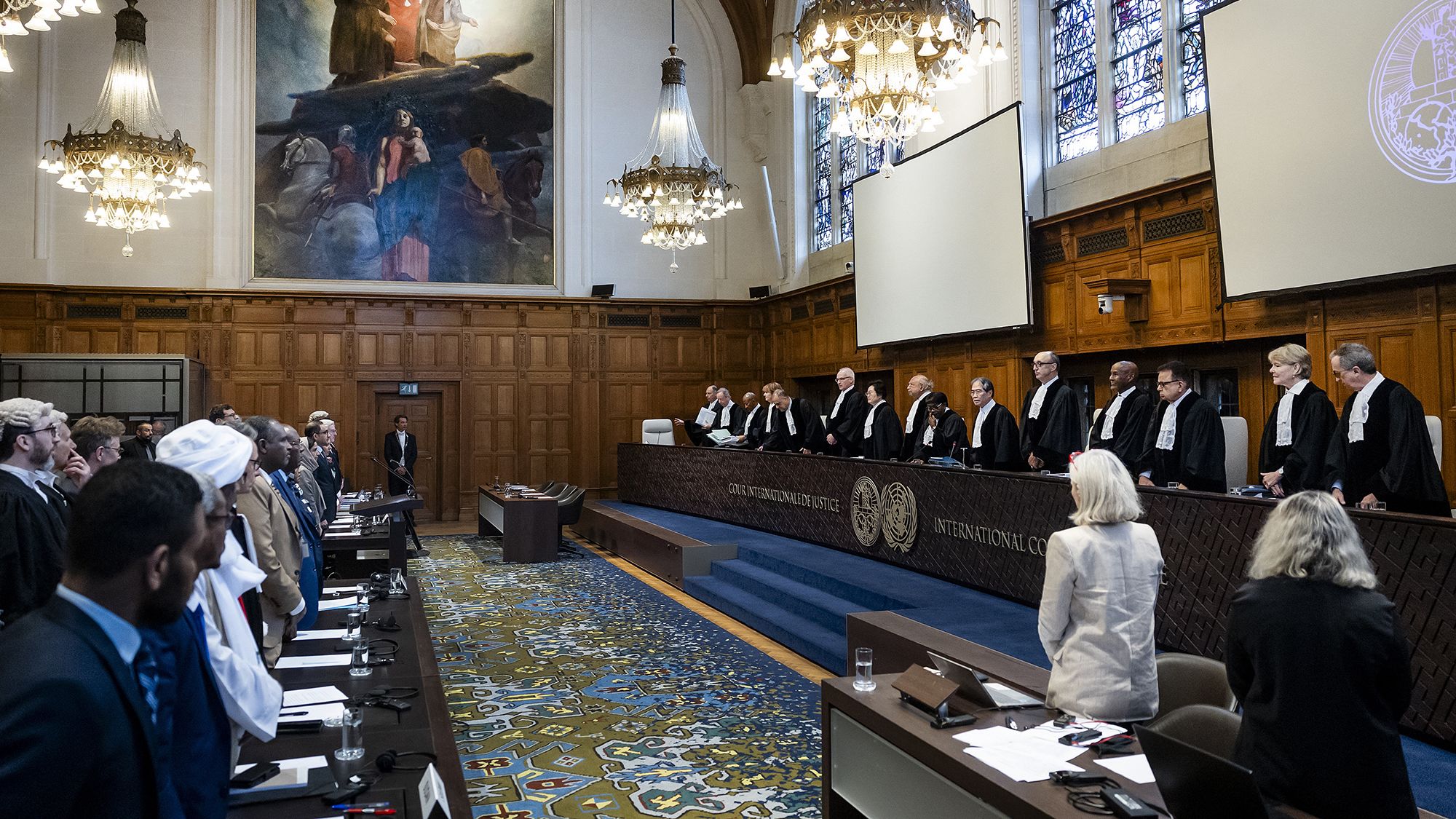
The top United Nations court has rejected a case brought by Sudan accusing the United Arab Emirates of helping commit genocide in the Darfur region.
The ruling, issued by the International Court of Justice (ICJ) in The Hague, ends the legal dispute before it could proceed further.
The case was originally filed by Sudan in March. Sudan’s government claimed that the UAE provided weapons and support to the Rapid Support Forces (RSF), a powerful paramilitary group involved in a brutal conflict with Sudan’s regular army. Sudan argued that this support led to acts of genocide against the Masalit ethnic group in western Sudan. The UAE denied the accusations from the start.
On Monday, the ICJ stated it does not have the authority to hear the case. The judges voted against Sudan’s request for emergency measures and decided to close the case entirely. This means the court will not examine Sudan’s claims in detail.
The UAE welcomed the ruling, calling it proof that the case was baseless. Officials in Abu Dhabi said Sudan’s military leadership used the case to shift attention away from its own role in the country’s violence. UAE representatives also pointed out that atrocities in Sudan have been committed by multiple groups, not just the RSF.
Sudan’s legal argument had focused on the Genocide Convention, a treaty both Sudan and the UAE have signed. Sudan’s acting justice minister told the court that genocide is taking place in Darfur, fueled by external support. However, the court did not examine those claims, as it concluded it had no jurisdiction over the matter.
Since April 2023, Sudan has been locked in a devastating civil war between the Sudanese Armed Forces, led by General Abdel Fattah al-Burhan, and the RSF, led by Mohamed Hamdan Dagalo. The conflict has destroyed cities, displaced millions, and triggered a humanitarian crisis with no end in sight.
International efforts to stop the war have failed so far. With both sides blaming each other and foreign involvement difficult to prove, legal action at the global level remains limited. The ICJ’s decision to dismiss the case shows the challenges of using international courts to resolve complex wars like the one in Sudan.