
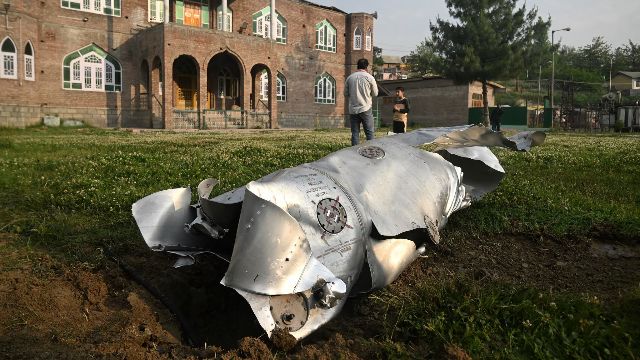
Three Indian fighter jets went down in the disputed region of Jammu and Kashmir on Wednesday, just hours after India launched a major cross-border air operation targeting what it called terrorist infrastructure inside Pakistan.
While Indian officials confirmed at least one crash, Pakistan made a bold counterclaim, stating it had shot down five Indian aircraft in retaliation. Indian authorities have not confirmed the extent of losses or causes of the crashes.
The jets crashed shortly after India struck nine locations in Pakistan and Pakistan-administered Kashmir. These strikes were launched in response to a deadly attack on April 22 in Pahalgam, where 26 tourists — 25 Indian and one Nepalese — were killed. India blamed the Pakistan-based militant group Lashkar-e-Taiba for the attack, accusing Islamabad of offering safe haven to terrorist groups.
In response, Pakistan’s military said it downed a mix of advanced Indian jets: three Rafale fighters, a MiG-29, and a Sukhoi Su-30. Open-source images circulating online showed wreckage with French-language markings, hinting the jets may have included Rafales or Mirage 2000s. No confirmation has been given on the models involved. Meanwhile, one Indian pilot was reported hospitalized after ejecting from a downed aircraft.
This latest military exchange has brought two nuclear-armed neighbors closer to the edge of open conflict. Tensions, already high after the Pahalgam attack, have rapidly escalated. India’s government reacted with swift diplomatic and economic actions, cutting trade ties, closing borders, and expelling Pakistani diplomats. Pakistan answered with military drills and missile tests in the Arabian Sea.
Both countries have stepped up military readiness. India deployed its aircraft carrier INS Vikrant, while Pakistan increased its air and ground force presence. A major Indian Air Force exercise was already planned near the border during the week, involving Rafales, Mirage 2000s, and Su-30s — suggesting that both sides had prepared for high-intensity engagement.
As of now, the exact cause of the jet crashes remains unclear. Indian officials have not said whether technical issues, combat losses, or enemy action were responsible. Online speculation suggests Pakistani air defenses or fighters may have engaged the jets, but no independent evidence has emerged.
The risks of further conflict are real. With both sides accusing each other of provocation and escalation, the potential for a broader clash hangs over the region. Experts warn that the presence of nuclear weapons adds another layer of danger to the situation, especially with diplomacy at a standstill.
India’s air force, among the world’s largest, is heavily equipped with modern aircraft and advanced missile systems. Its Rafale fighters carry long-range Meteor missiles and SCALP cruise missiles capable of precision ground attacks. The recent addition of 26 Rafale Marine jets under a $7.5 billion deal further boosts India’s aerial power, though some question whether the high costs justify their use over cheaper stealth alternatives.
With no clear de-escalation in sight and tensions still rising, the region braces for what could be the most serious India-Pakistan standoff in years.