
The UK government has updated its travel guidance for India and Pakistan after a surge in military violence between the two countries led to dozens of casualties and a sharp rise in regional tensions.
British nationals are now advised to avoid travel near key border areas, as fears of a broader conflict grow.
The travel advisory was updated after Indian forces launched missile strikes into Pakistani territory and Pakistan-administered Kashmir. At least 26 people were killed and 46 injured in the attacks, which targeted locations allegedly linked to militant activity. The strikes followed last month’s deadly assault on tourists in the Indian-controlled region of Kashmir, which India blames on Pakistan-based militant groups. Islamabad has denied any involvement.
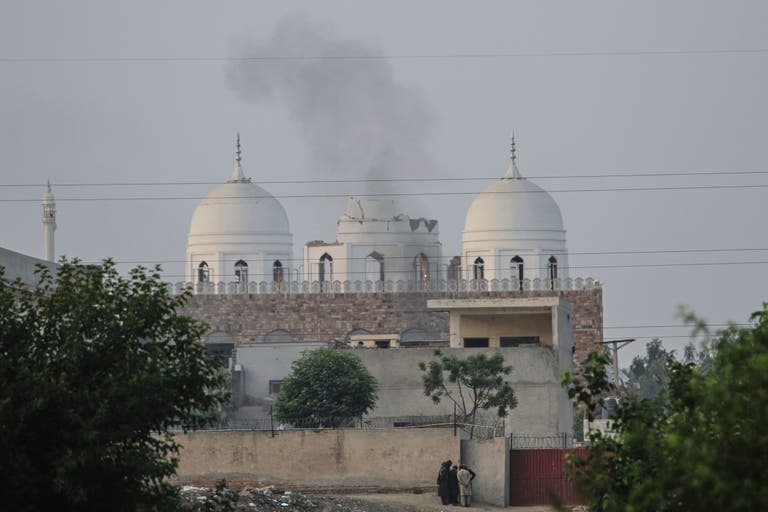
In response to the strikes, Pakistan’s military returned fire across the Line of Control, the de facto border that divides the disputed territory. The Pakistani government reported multiple civilian casualties and confirmed that the Subhan Mosque in Bahawalpur, Punjab, was among the buildings hit. A doctor at a local hospital said the mosque strike killed 13 people, including a child. Meanwhile, the Indian army said at least seven civilians were killed by Pakistani shelling in its territory.
The UK Foreign, Commonwealth and Development Office now advises against all travel within 10 kilometers of the India-Pakistan border, 10 miles of the Line of Control, and the Balochistan province in Pakistan. The agency cited active military exchanges and the potential for further escalation. It also warned that the situation could disrupt civil aviation, with reports already indicating airspace closures and diverted flights. British travelers are urged to check with airlines and follow guidance from local authorities.
In addition to military actions, Indian authorities announced a large-scale civil defense drill across several states. The exercise, planned for May 7, may involve blackouts, sirens, mobile signal interruptions, and evacuation simulations. Officials stressed the drill is unrelated to the airstrikes but could add confusion amid the tense climate.
Reactions from UK political figures reflected growing alarm. Scotland’s First Minister John Swinney and Labour MP Stella Creasy both expressed serious concern, urging restraint and diplomacy. Creasy called for international attention to the situation, warning that the conflict could rapidly worsen and pose grave danger to civilians. Former minister Lord Ahmad said the threat of full-scale war was now a very real possibility.
Pakistan’s Prime Minister Shehbaz Sharif condemned the Indian strikes as acts of aggression and vowed a forceful response. He labeled the attacks as cowardly and said the nation had a right to defend itself. A meeting of Pakistan’s National Security Committee was called to address the crisis.
With two nuclear-armed countries exchanging fire and trading accusations, the international community is watching closely. The conflict has reopened longstanding wounds over Kashmir, a region at the heart of past wars and decades of hostility. As both sides mobilize and rhetoric intensifies, many fear the consequences of another misstep could be catastrophic.