
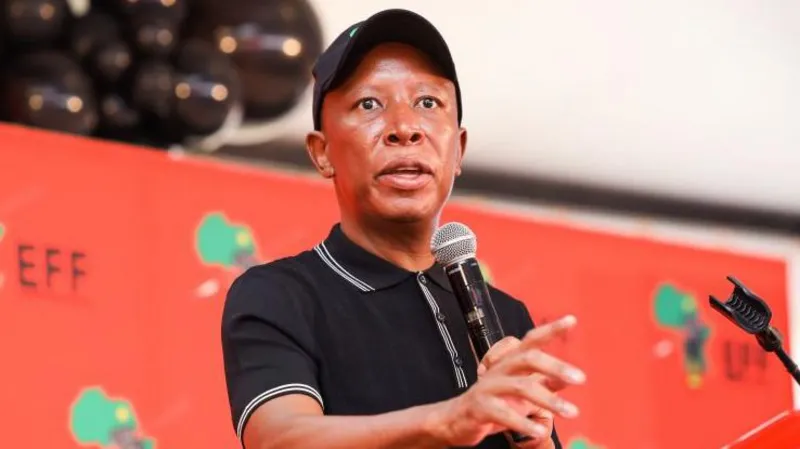
South African opposition leader Julius Malema has lashed out after failing to secure a UK visa in time for a conference speech, accusing British authorities of deliberately blocking his visit to silence critical views.
Malema, who leads the Economic Freedom Fighters (EFF), was scheduled to speak at the Africa Together Conference at the University of Cambridge on May 10. The event, hosted by the university’s African Society, invited Malema to share his thoughts on Africa’s future. But with just hours to go before departure, the EFF says the UK High Commission informed them that the visa would not be processed in time.
The delay sparked sharp criticism from Malema, known for his vocal stance against Western influence in Africa and his call for the nationalisation of white-owned land in South Africa. He took to social media, describing the situation as “unacceptable and spineless,” and accused the UK of attempting to block dissenting voices.
In a leaked letter addressed to EFF member Godrich Gardee, UK High Commissioner Antony Phillipson said he was “deeply sorry” that the visa process could not be completed. He blamed the delay on standard procedures and the unfortunate timing of UK bank holidays, including one on May 5, which reportedly disrupted processing schedules.
The High Commissioner stated he had taken a personal interest in the matter and acknowledged that the EFF delegation had applied ahead of time, even paying for priority processing. Despite that, the UK Home Office could not complete the application. As a gesture, it agreed to refund the application fee.
The EFF insists that the delay was intentional. They claim that promises were made assuring the delegation that the visa issue would be resolved, only for the approval to fall through at the last minute. The party accuses the UK of deliberately stalling the process to prevent Malema from addressing the conference and sharing his political views.
So far, the UK Home Office has not issued a formal comment on the incident. The controversy adds another layer to Malema’s often confrontational relationship with Western powers, whom he frequently accuses of interfering in African affairs.
With South Africa heading into a key political period, the incident may fuel further debate about international relations, freedom of speech, and the role of global institutions in shaping political discourse.