
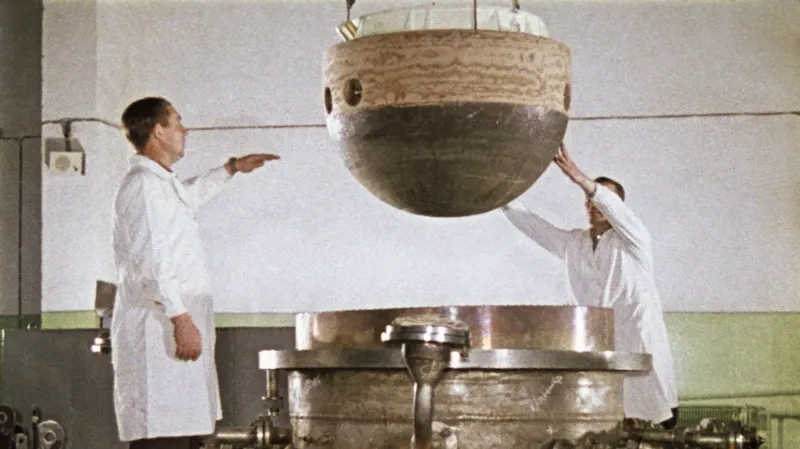
A piece of space hardware launched more than five decades ago by the former Soviet Union is believed to have re-entered Earth’s atmosphere, according to space experts.
The object, part of the Kosmos 482 spacecraft sent into orbit in 1972, had been circling the planet for over 50 years after a failed mission to Venus.
Originally designed to land on Venus, Kosmos 482 failed to break free from Earth’s gravity and was left in orbit, eventually breaking into four parts. Now, scientists at the European Union Space Surveillance and Tracking Centre say that one of those parts, most likely the lander capsule, made its return to Earth early Saturday morning around 06:16 GMT.
It is not yet known where exactly the object came down or whether it burned up completely during re-entry. Because the lander was built to survive the extreme conditions of Venus—heat, pressure, and intense entry speeds—it had a strong heat shield and tough structure, leading experts to believe parts of it may have survived the descent.
While such events can raise alarm, experts stress that the chance of this debris causing harm is extremely low. With most of Earth’s surface covered by oceans and vast uninhabited land, the likelihood of debris striking a populated area remains tiny.
The parachute system attached to the original lander would have been intended to slow its descent, but after more than five decades in orbit, that equipment likely degraded and failed to deploy.
Space objects entering the atmosphere is not a rare event. According to analysts, large fragments fall back weekly and smaller ones do so daily, though most burn up completely before hitting the ground. Notable examples include China’s Long March rocket booster in 2022 and the Tiangong-1 space station in 2018.
Kosmos 482 is now under close watch by global space agencies. Its return highlights the growing need to address space debris, especially aging satellites and spacecraft left in orbit. Modern spacecraft are now being built with safer re-entry plans, including the ability to steer themselves back into the atmosphere in a controlled way.
Such design improvements not only reduce the risk of unexpected crashes but also help protect Earth’s environment and its population from potential harm linked to the growing problem of space junk.