
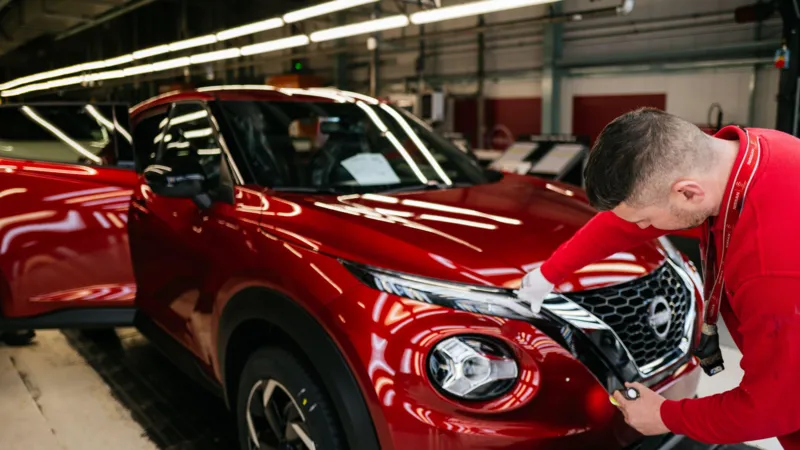
Nissan is set to slash 11,000 more jobs and shut down seven of its factories as the Japanese automaker faces growing challenges in its biggest markets and tries to recover from a string of financial setbacks.
The move is part of a larger restructuring plan aimed at cutting costs and stabilizing the business after a year of weak sales and failed partnerships.
The announcement brings the total job cuts over the past 12 months to around 20,000, representing roughly 15% of Nissan’s global workforce. The company employs about 133,500 people worldwide, with around 6,000 based in Sunderland, UK. While Nissan has not confirmed which locations will be affected, the bulk of the layoffs will come from manufacturing, with the remainder impacting sales, administration, research, and contract roles.
Nissan’s troubles have deepened in recent months, particularly in China and the United States, where falling demand and aggressive price wars have eaten into profits. China’s market, now dominated by local electric vehicle makers like BYD, has proved especially difficult for traditional car brands. Meanwhile, high inflation and rising interest rates in the US have dampened car sales, making it harder for Nissan to maintain its footing.
The carmaker also suffered a major setback earlier this year when merger talks with rivals Honda and Mitsubishi broke down. The deal, which was expected to create a global automotive powerhouse worth $60 billion, fell apart over disagreements on leadership and integration. Following the failed talks, Nissan replaced its chief executive with Ivan Espinosa, previously the head of planning and motorsports, in a leadership shake-up.
Nissan’s financial results have reflected the broader turmoil. The company reported a significant annual loss of 670 billion yen, or roughly $4.5 billion. Tariffs introduced by former US President Donald Trump also added to the company’s financial strain, creating uncertainty about future trade conditions.
In response, Nissan has been scaling back its global operations. Alongside the job cuts and plant closures, the company recently cancelled plans to build a new battery and electric vehicle factory in Japan. This decision signals a more cautious approach to future investments, even as the global auto industry shifts rapidly toward electrification.
Despite the shakeup, Nissan has not issued a forecast for the upcoming year, citing ongoing economic uncertainty and unresolved trade issues. Company officials say the next phase of their strategy will focus on improving efficiency and regaining lost market share, but they acknowledge that the road ahead remains uncertain.
As global competition intensifies and consumer preferences shift, Nissan’s latest moves mark a critical attempt to stay competitive. With thousands of jobs on the line and factories set to close, the company’s future will depend on how well it can adapt to the fast-changing landscape of the global auto market.