
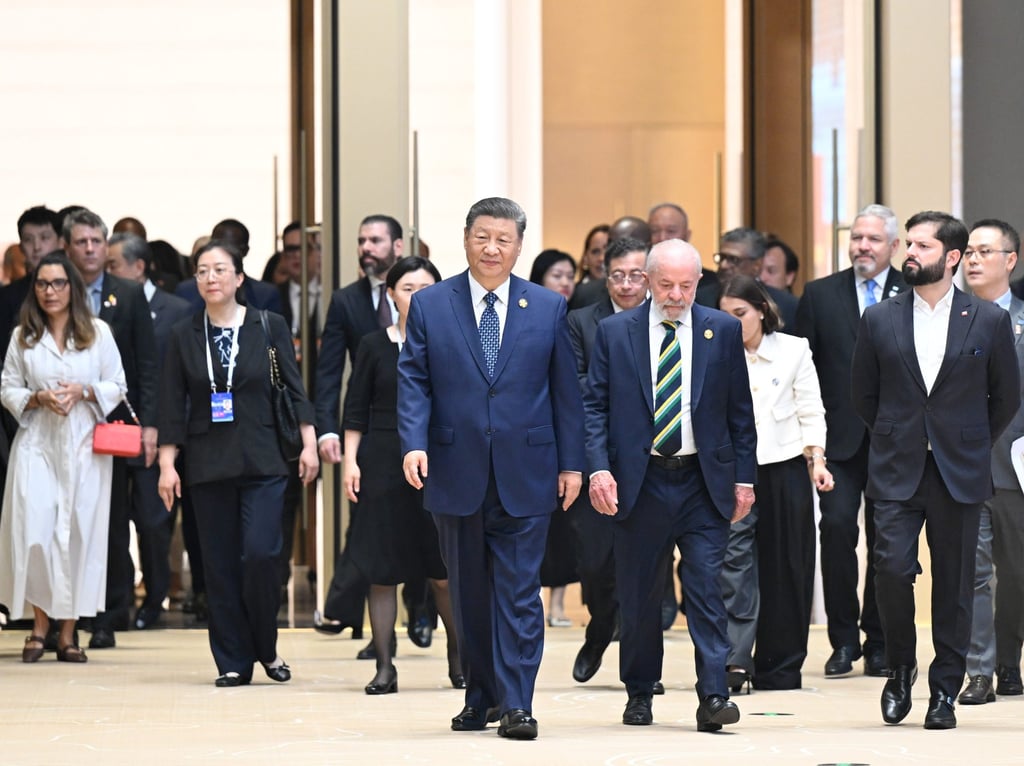
Chinese President Xi Jinping welcomed Brazilian President Luiz Inacio Lula da Silva in Beijing on Tuesday, where both leaders pledged to deepen their strategic ties and support a world order less dominated by powerful Western nations.
The meeting comes at a time of growing global uncertainty, as trade tensions rise and new political alliances take shape.
The leaders met in the Chinese capital to discuss ways to enhance cooperation between the two largest economies in Asia and South America. Their talks focused on building a more balanced global system that includes stronger voices from developing nations. As the United States, under President Donald Trump, continues to enforce wide-reaching tariffs, China and Brazil are working together to counter what they see as unfair economic pressure.
The meeting was part of Lula’s state visit to China, where both sides signed several agreements aimed at boosting trade, investment, and diplomatic collaboration. During the talks, they voiced support for a multipolar world — one where power is shared more equally among nations, rather than concentrated in a few.
A joint statement issued after the talks urged Russia and Ukraine to begin direct negotiations to end the ongoing war. The call came ahead of planned peace talks in Istanbul, where both China and Brazil hope diplomatic efforts can move forward. President Trump, who has expressed interest in attending the talks, may also play a role in the discussions.
The leaders also presented their countries as champions of the Global South — a term often used for nations in Africa, Asia, and Latin America that are seeking greater influence in world affairs. They stressed the importance of cooperation among developing nations to protect their interests in a shifting global landscape.
During a joint appearance, Xi described the talks with Lula as warm and productive. He pointed to the strong foundation of the China-Brazil relationship and noted the potential for the two nations to work together more closely in areas such as energy, technology, and agriculture. Lula, in return, expressed appreciation for China’s partnership and stressed the need for unity among countries facing similar challenges.
As economic pressures continue to mount from tariffs and shifting alliances, China and Brazil appear ready to take a more active role on the global stage. Their shared message is clear: a new kind of international cooperation is needed, one that better reflects the needs and voices of the world’s emerging powers.