
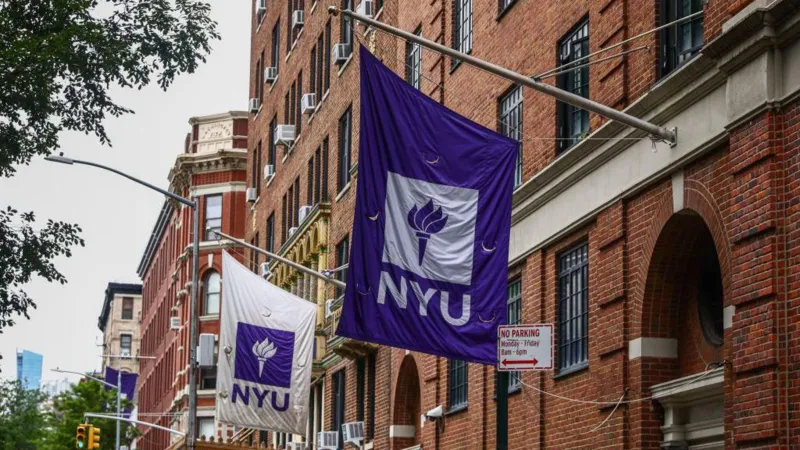
A student speaker at New York University is at the center of controversy after the school decided to withhold his diploma following remarks he made about the Gaza conflict during his graduation speech.
The case has added new tension to a growing debate on how far students can go in expressing political views at public events, especially at institutions under federal scrutiny.
The incident happened at NYU’s Gallatin School graduation ceremony. Logan Rozos, a graduating student, used his time at the podium to talk about the war in Gaza and criticized the US government’s role in it. His short but powerful speech received mixed reactions from the crowd. While some applauded, others responded with disapproval. Rozos spoke about the violence and suffering in Gaza, making clear his belief that American support was helping to fuel the conflict.
Rozos had been chosen as one of the student speakers for the ceremony, but NYU officials said he did not share the actual content of his planned speech in advance. They accused him of using the platform to push a personal political message, going beyond what was approved. University representatives say they are now reviewing the situation and have taken the step of pausing the release of his diploma as part of a disciplinary process.
The university’s reaction quickly drew attention on social media and among advocacy groups. Some students and free speech supporters argue that Rozos was exercising his right to speak out on an issue he cares about. Others say a graduation ceremony is not the place for political messages. NYU issued a statement saying the moment was misused and did not reflect the purpose of the event, which was to celebrate all students equally.
Rozos’ comments come at a time when political speech on college campuses has become a flashpoint. The Trump administration has been closely monitoring elite universities for what it describes as rising antisemitism. NYU is one of several schools under federal investigation. The White House has warned institutions to protect Jewish students or risk losing funding, which has increased pressure on schools to respond quickly to incidents involving Israel and Palestine.
Rozos, who has been described in profiles as an actor, writer, and member of the LGBTQ+ community, has not yet released a full public response since the university’s actions. His short speech, which did not name Israel or Jewish people, has fueled online debate, with many questioning whether his remarks violated any rules or simply challenged popular opinion in a difficult political moment.
This case is one of many recent examples of college students facing serious consequences for voicing support for Palestinians during the ongoing war. Other students across the US, particularly those with international status, have also come under government scrutiny, and in some cases, have been detained or threatened with deportation. Supporters of those students say it is part of a larger crackdown on activism, while federal officials insist they are enforcing national security and student conduct rules.
NYU has not said when a final decision will be made about Rozos’ diploma. The school has confirmed that it is continuing its internal review and will take further action based on the outcome. Meanwhile, the incident is being widely discussed on and off campus, with students, faculty, and the public divided on what free speech should look like during one of the most important days in a graduate’s life.