
Nissan has announced it is considering sharing its global production facilities with long-time Chinese partner Dongfeng, a state-owned automaker, as part of a sweeping overhaul to counter mounting financial losses and declining sales.
In an interview with the BBC, Nissan officials said they are open to integrating Dongfeng “into the Nissan production ecosystem globally.” This comes as the Japanese car giant moves to cut costs after reporting a massive annual loss of 670 billion yen ($4.6 billion).
The restructuring plan includes laying off 11,000 employees and shutting down seven factories worldwide, although Nissan has yet to specify which locations will be affected. These cuts follow a previous announcement of 9,000 layoffs, bringing the total reduction to 15% of its global workforce.
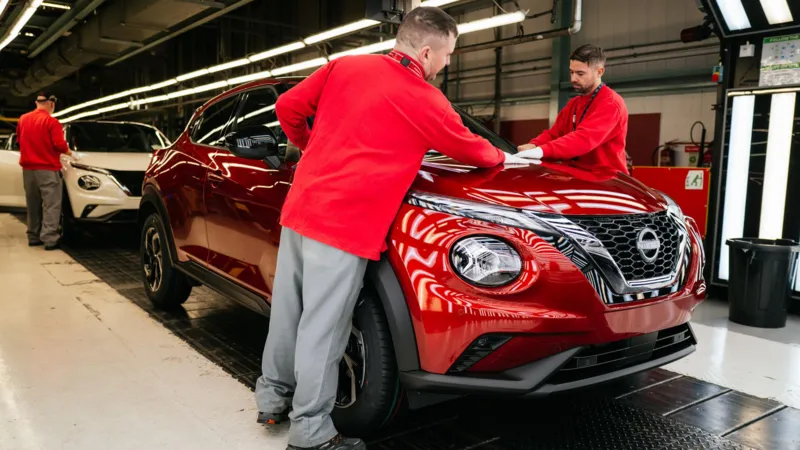
Despite the global shakeup, Nissan reassured its UK employees that its Sunderland plant — which employs around 6,000 people — is safe for now. “In the very short term, there’s no intention to go around Sunderland,” said Ivan Espinosa, Nissan’s newly appointed CEO, at a Financial Times conference on Thursday. The site recently secured new model launches and a government-backed battery plant through a £1 billion investment in partnership with AESC.
Nissan’s difficulties are linked to weak performance in the US and China, the latter being the world’s largest auto market. The firm’s own brands have struggled to compete with aggressive local manufacturers, resulting in falling prices and shrinking market share.
The company has had a two-decade partnership with Dongfeng, with both firms jointly manufacturing vehicles in Wuhan. The latest proposal to expand Dongfeng’s role internationally hints at a deeper reliance on the Chinese partner as Nissan adjusts to global market dynamics.
Nissan has also been grappling with leadership turmoil. The failure of merger talks with Honda earlier this year led to the resignation of CEO Makoto Uchida. His successor, Espinosa, previously served as the firm’s chief planning officer and head of motorsports.
Meanwhile, UK Chancellor Rachel Reeves welcomed the new battery plant in Sunderland, saying it would bring “high-quality, well-paid jobs” to the North East and support the production of electric models like the Juke and Leaf.
As Nissan aims to cut its global production capacity by 20%, it faces the dual challenge of recovering from financial setbacks while repositioning itself in a rapidly shifting automotive industry.