
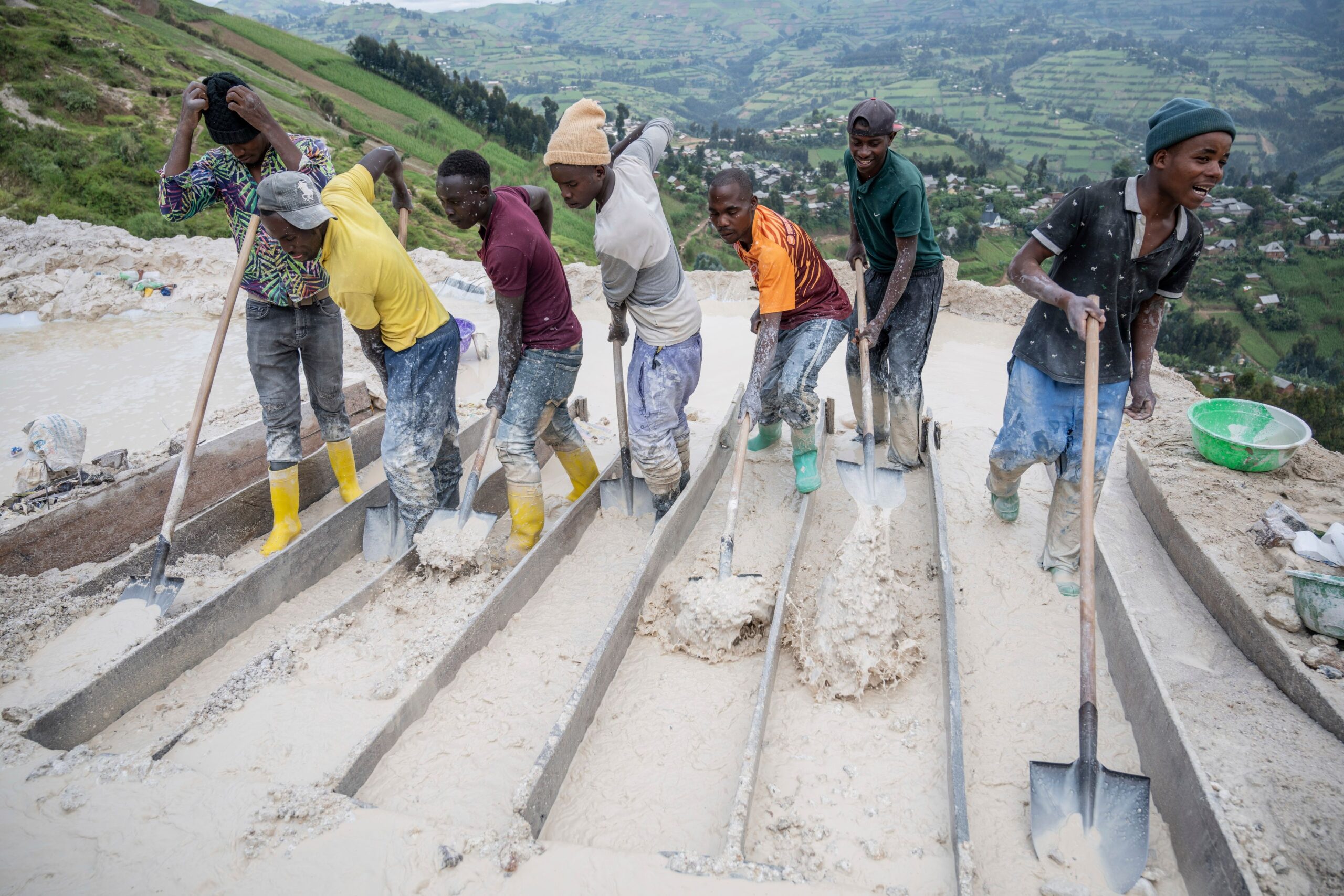
In the green hills of eastern Congo’s Masisi region, hundreds of men work with their hands in the Rubaya mining site, digging for coltan — a mineral essential to today’s phones, computers, and defense technologies.
Despite the global demand, those who extract this valuable resource see little reward for their labor.
The Rubaya mines are located in a region rich in minerals but long plagued by violence. For years, eastern Congo has been the center of conflict between government troops and armed rebel groups. One of the most active is M23, a group widely believed to be supported by Rwanda. The group’s recent resurgence has escalated fighting and forced thousands more to flee their homes in what is already one of the world’s worst humanitarian disasters.
In an attempt to calm the situation, Congo’s President Felix Tshisekedi has turned to the United States, offering access to the country’s mineral wealth in exchange for help in restoring peace and security. While specific agreements have not been made public, observers believe key sites like Rubaya may be involved. Talks have reportedly gained momentum since U.S. President Donald Trump became involved in pushing for a solution.
The Rubaya mine has changed hands over the years, falling under both government and rebel control. M23 has held the site for more than a year now and used it as a source of income. According to United Nations findings, the group collects large sums by taxing the transport and trade of coltan. The ore is exported to Rwanda, where it enters international supply chains.
For the miners in Rubaya, this conflict and political maneuvering mean little in their daily lives. Most live in poverty, with wages that barely cover basic needs. Many earn under $50 a month, despite working in conditions that are physically demanding and often dangerous. Their role in powering the world’s devices offers no guarantee of a better future.
Coltan — short for columbite-tantalite — contains tantalum and niobium, metals seen as essential by countries including the U.S., China, Japan, and members of the EU. Tantalum is used in everything from smartphones to missile systems, while niobium plays a role in aerospace and energy infrastructure. In 2023, Congo accounted for nearly 40% of global coltan production, placing it at the heart of a vital global industry.
Even with such importance, tracking the path of Congolese coltan is difficult. Experts describe the international trade as tangled and opaque. Once mined, the ore is typically sold by middlemen — many of whom are foreign — and shipped to Rwanda. From there, it is exported to countries like the United Arab Emirates or China, where it is refined and eventually sold to manufacturers in the West.
Since M23’s takeover of Rubaya, Rwanda’s official coltan exports have significantly increased. Analysts and U.N. reports suggest that Rwanda has long benefited from minerals extracted in Congo, both during times of open conflict and under more discreet arrangements. The difference now is who holds direct control of the site.
Other groups, such as the Wazalendo coalition, have also occupied mining areas in the past. Shifts in control rarely change conditions for miners. The profits flow outward, while workers stay locked in cycles of poverty.
The story of coltan in Congo is one of global dependence and local neglect. While governments negotiate and companies profit, the miners continue to toil with little improvement in their lives. The minerals they unearth fuel modern technology across the world, but their own future remains uncertain and fragile.