
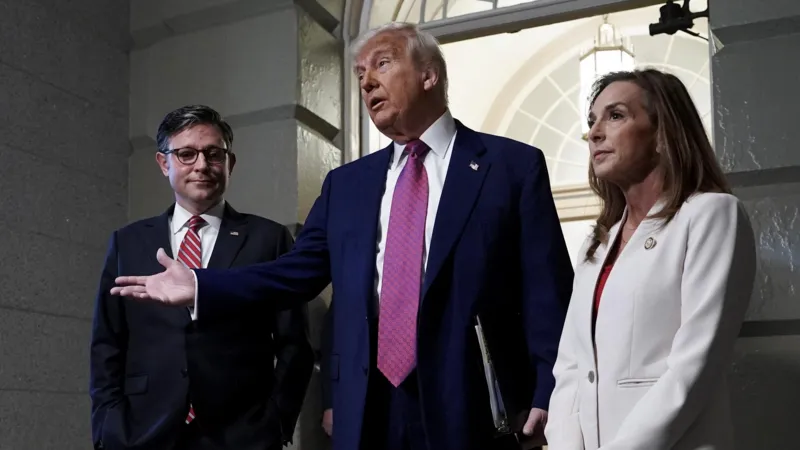
With his signature budget proposal hanging in the balance, President Donald Trump made a rare personal appearance on Capitol Hill Tuesday, pressing House Republicans to unite behind the sweeping plan.
The visit came just days before a crucial vote that could determine the fate of a bill central to Trump’s second-term agenda.
Trump’s trip to Congress was aimed at breaking the deadlock within his own party. The legislation includes around $4.9 trillion in tax cuts and significant changes to healthcare and state tax deductions. But disagreement remains. Conservative members want deeper spending cuts, while moderates, especially those from high-tax states like New York and California, are demanding revisions to the proposed changes on state and local tax (SALT) deductions.
The scene on Capitol Hill reflected the high stakes. Security was tight and the halls buzzed with activity as lawmakers, aides, and reporters prepared for Trump’s arrival. Inside, Trump tried to rally Republicans with a mix of pressure and persuasion, urging them to come together and deliver a legislative win ahead of the Memorial Day deadline.
While the meeting did win him some support, it did not resolve the internal disagreements. Several lawmakers, including New York Republican Mike Lawler, made clear they still oppose the bill. Lawler, frustrated by the SALT cap proposal, reiterated his refusal to vote for the bill unless the cap is raised further. He said the current version does not do enough to help middle-class taxpayers in his state.
The bill proposes to increase the SALT deduction limit from $10,000 to $30,000 for couples, but lawmakers from high-tax states argue that isn’t sufficient. They want a higher cap that reflects the cost of living in their districts.
Beyond taxes, the proposed cuts to Medicaid have caused further division. The plan would introduce new work requirements for able-bodied adults using the low-income health program, starting in 2029. Some Republicans back the tougher rules, but others warn that they go too far and risk cutting off vulnerable Americans from essential care.
Trump, in private conversations, tried to calm those fears and reassure members that the bill strikes the right balance between reducing waste and protecting services. Budget Committee Chairman Jodey Arrington backed the President’s message, saying Trump’s tone and focus helped keep attention on controlling spending.
But not everyone left the meeting convinced. Representative Andy Harris, a leader in the Freedom Caucus, said he remained unsatisfied, arguing that the bill does not cut deeply enough into entitlement programs.
This is Trump’s first major legislative test of his second term. Last week, the bill stumbled during a key procedural vote, delaying progress. It narrowly advanced through a committee vote on Sunday, giving it new momentum. But as it heads to the full House for a final vote—expected on Wednesday or Thursday—the outcome remains uncertain.
With a slim Republican majority, Trump cannot afford more than a handful of defections. The next few days will determine whether his personal push pays off—or if internal party divisions deliver a serious blow to one of his most ambitious proposals.