
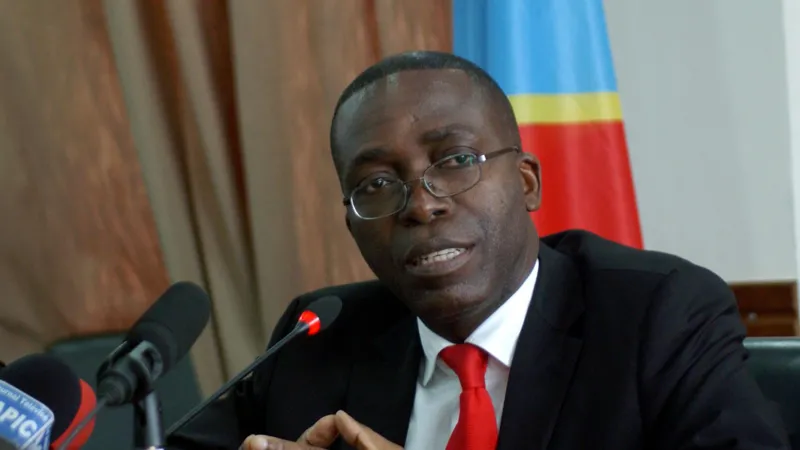
A former prime minister of the Democratic Republic of Congo has been sentenced to 10 years of forced labour after being found guilty of embezzling hundreds of millions in state funds.
Augustin Matata Ponyo, who led the country’s government from 2012 to 2016, was convicted alongside Deogratias Mutombo, the former central bank governor, in a long-running corruption case linked to a failed agricultural project.
The court ruling, delivered by the Constitutional Court on Tuesday, concluded that nearly $245 million had been misappropriated from a high-profile farming initiative meant to address widespread hunger. The funds were earmarked for the Bukanga-Lonzo Agro-Industrial Park, a massive development launched with hopes of transforming food production in the country. The project, backed by international partners including the African Development Bank, promised tens of thousands of jobs and aimed to improve food security for millions. It never reached its potential.
While Matata’s legal team claims the judgment is politically charged, the court maintained its findings were based on financial evidence gathered over the past four years. The initial investigation began in 2020 when the country’s finance watchdog flagged serious irregularities in the handling of the project’s funds.
Matata, once praised for his economic reforms as finance minister, has denied any wrongdoing throughout the legal process. He currently leads the Leadership and Governance for Development party and was a vocal critic of President Felix Tshisekedi during the last election cycle, although he eventually withdrew from the presidential race.
Deogratias Mutombo, who was also convicted in the same case, received a five-year sentence of forced labour. He has not commented publicly on the court’s decision. Both men are now banned from holding public office for five years after their sentences end.
Forced labour is permitted under Congolese law when ordered by a court as a criminal punishment. International observers have long scrutinised the use of such penalties, especially in high-profile political cases.
The Bukanga-Lonzo project was once seen as a turning point for a country that has struggled with decades of conflict, poverty, and food insecurity. Its failure and the scandal surrounding it have renewed public anger about the mismanagement of development funds in a nation where more than 28 million people face food shortages.
This latest ruling adds to growing pressure on DRC authorities to crack down on corruption and rebuild public trust in government-led initiatives. As the country looks for new solutions to chronic poverty and food instability, the fallout from this case serves as a stark reminder of the cost of misused public resources.