
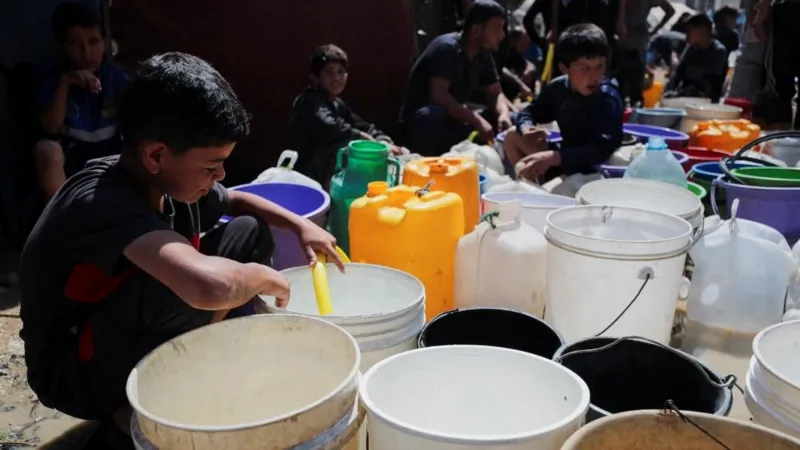
Water shortages in Gaza are worsening as Israel’s military campaign spreads, forcing thousands of people to flee again and putting critical water systems on the verge of total shutdown.
Desalination plants, wells, and hygiene centers are struggling to stay open without fuel. Aid agencies have warned that these services could stop entirely within days.
The situation escalated after Israel tightened its blockade in early March, cutting off aid and shutting down power to Gaza’s main desalination facilities. This move came as pressure to recover hostages continued. Even now, although Israel has allowed some aid trucks to enter, fuel remains blocked. Without it, clean water cannot be produced or delivered.
In response to the ongoing crisis, aid workers and local families are resorting to desperate measures. Water is being delivered by donkey carts or lorries where possible, but it is not enough. Parents say their children now drink salty or partially treated water because there is no choice. Doctors have noted a rise in kidney-related illnesses and infections, especially among young children, due to unsafe water.
Inside desalination plants, operations have nearly stopped. One plant in the south is only producing a fraction of what it used to after losing power. Staff say fuel is needed not only to produce water but also to transport it. With no new fuel entering Gaza since early March, the few remaining reserves are drying up quickly.
Across northern Gaza, the lack of fuel has already forced water wells to reduce their operating hours. Complete closures are expected soon. In the south, utilities have also cut back. More than 140,000 liters of fuel are needed every week to keep systems running, but the supply is not arriving.
UN workers say they are trying to access fuel from storage sites, including in Rafah, but Israeli permissions have been denied. The ongoing military activity has only made the situation more difficult. Each day, more people are displaced, and water access becomes harder.
Doctors are witnessing the cost of this crisis firsthand. At Gaza’s largest hospital, one kidney specialist says more children are falling sick from contaminated water. The hospital has over 200 dialysis patients, many of whom are at risk. Several have died recently due to poor water conditions.
This worsening water crisis comes as global pressure grows for better aid access in Gaza. Despite promises to ease restrictions, the help reaching civilians remains too little. Without fuel, clean water, and safety, Gazans are left to face growing health risks in an already devastated region.