
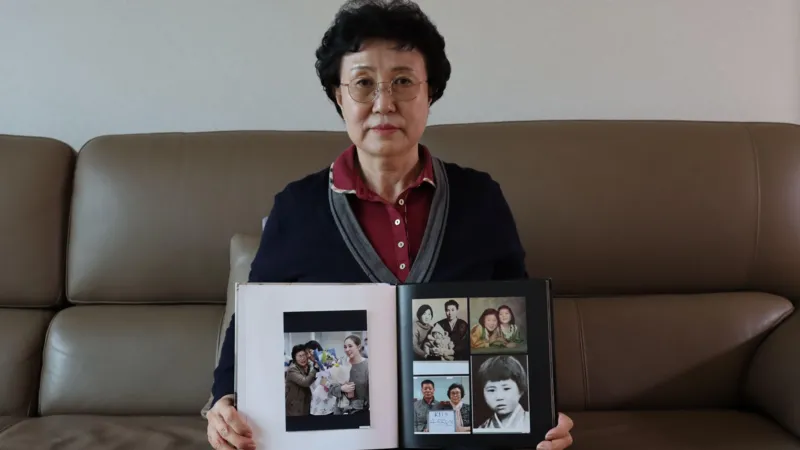
A South Korean mother finally reunited with her daughter after more than four decades is now taking legal action against the government.
Han Tae-soon lost contact with her daughter Kyung-ha in 1975 when the six-year-old disappeared near their home in Seoul. The mother had been searching endlessly since that day, determined to find her child.
The story began one day in May 1975 when Kyung-ha told her mother she would be playing outside with friends but never returned. Despite years of efforts involving police reports, orphanage visits, flyers, and television appeals, Kyung-ha remained missing. Ms. Han and her husband spent countless days searching, but their efforts brought no success for many years.
What Ms. Han discovered decades later was painful and shocking. Kyung-ha had been taken from her home and placed in an orphanage, where she was then illegally adopted by a family in the United States. The adoption program in South Korea has long faced criticism, with hundreds of cases pointing to fraud, kidnappings, and human trafficking through overseas adoptions.
South Korea has sent more children abroad for adoption than any other country, with between 170,000 and 200,000 children adopted mainly in Western countries since the 1950s. Recently, an official investigation revealed that the government failed to properly supervise adoption agencies, allowing children to be sent overseas without enough protection for their rights or well-being.
In 2019, Ms. Han’s life changed when a DNA matching group connected her with Kyung-ha, now living as Laurie Bender in California. The reunion was emotional but bittersweet. Ms. Han expressed deep pain over the years of searching and the government’s lack of responsibility. This feeling of injustice is what drives her to sue the South Korean government, demanding they acknowledge their role in the tragedy and take responsibility.
The government has responded by showing sympathy for those affected and has promised to act according to the court’s decision. Ms. Han’s lawsuit is among the first of its kind, marking a significant moment for other families and adoptees seeking justice after years of silence. This case shines a light on the need for stronger protections and transparency in the adoption process.
Kyung-ha’s story reflects the experience of many others caught in a system that operated for profit with little regard for family bonds. The reunion after 44 years brought relief but also raised many questions about the past. Ms. Han’s fight continues, not only for herself and her daughter but also for all those who lost loved ones under similar circumstances.