
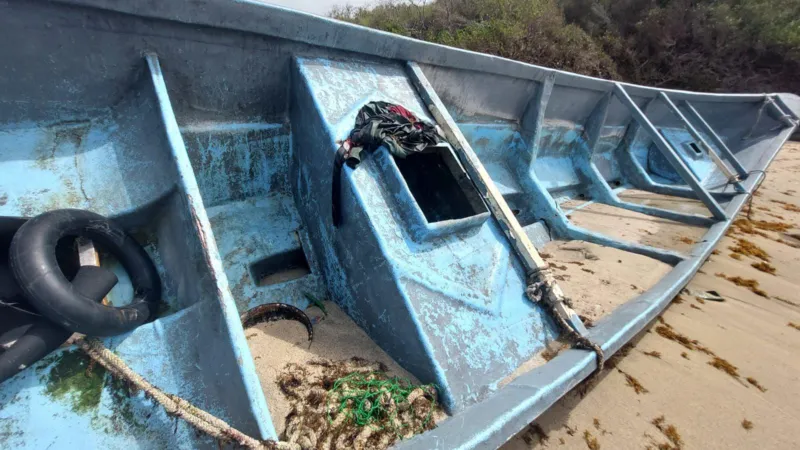
A tragic discovery was made on the shores of Canouan Island, part of St Vincent and the Grenadines, when a boat carrying the bodies of 11 people was found on Monday.
Local authorities believe the deceased were migrants, with passports found at the scene pointing to Mali, a country in West Africa over 6,000 kilometers away.
The vessel, roughly 45 feet long, was found grounded in Little Bay. It is the second such case in recent months in the region. A similar boat carrying 13 dead bodies also washed up in nearby St Kitts and Nevis earlier this year. Some of those victims, too, carried Malian documents.
Officials are still working to confirm the identities of those on board, but early evidence suggests a likely link to Mali’s ongoing crisis. The country has faced years of instability, armed conflict, and food insecurity, forcing many to flee in search of safety and opportunity.
According to the United Nations Refugee Agency, the group on this vessel may have been trying to reach Europe, specifically the Canary Islands, by taking the Atlantic route. That path is considered dangerous, especially in small, overcrowded boats like the one that washed up in Canouan. The UN has warned that these journeys are often exploited by smugglers who take advantage of desperate migrants willing to risk their lives.
Mali has experienced ongoing violence and displacement since 2012, when a rebellion and military coup led to the rise of extremist groups and years of fighting. Over 6 million people in Mali are currently in need of humanitarian assistance, with more than 1.5 million facing emergency levels of food insecurity.
For many Malians, life at home is no longer safe or sustainable. But fleeing the country doesn’t guarantee safety either. Neighboring nations in the Sahel region offer limited support and face similar challenges. This pushes migrants to attempt long, treacherous journeys across the Atlantic in hopes of finding a better future.
The discovery of the boat in the Caribbean underscores the growing reach of the migration crisis. It also points to a shift in smuggling routes, as traffickers look for less-patrolled paths. While the Mediterranean has long drawn international attention for migrant deaths, experts warn that the Atlantic route remains overlooked and dangerous.
As investigations continue, local authorities and humanitarian groups stress the need for greater awareness and cooperation to prevent such tragedies and protect vulnerable migrants from falling into deadly traps.