
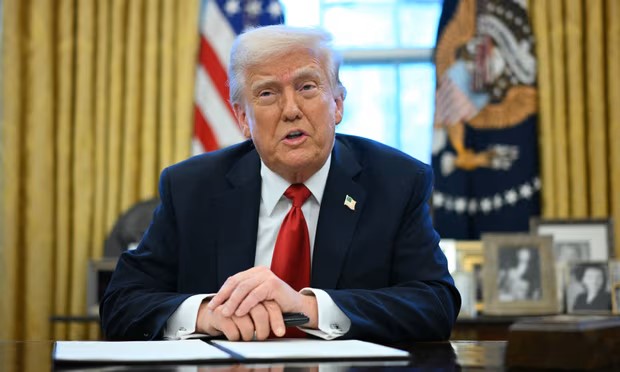
In a significant move late Wednesday night, President Donald Trump signed an extensive travel ban, restricting entry for nationals from 12 countries while imposing partial restrictions on seven others. The White House asserts this is a necessary measure to enhance U.S. security.
The proclamation supersedes earlier contested versions, blocking entry from Afghanistan, Burma, Chad, Congo, Eritrea, Haiti, Iran, Libya, Somalia, Sudan, Yemen, and Equatorial Guinea. Additionally, partial restrictions apply to Burundi, Cuba, Laos, Sierra Leone, Turkmenistan, Venezuela, and Togo.
Exceptions exist for lawful permanent residents, current visa holders, specific visa categories, and individuals whose entry is deemed beneficial to U.S. national interests.
A senior official confirmed that Trump had been weighing this decision for weeks but chose to expedite it following a recent antisemitic attack in Boulder, Colorado.
The White House defended the ban as a necessary action against security deficiencies, claiming that the affected nations do not meet U.S. requirements for information-sharing and identity verification. “We cannot compromise the safety of the American people,” the official affirmed.
Critics quickly labelled the ban as an extension of discriminatory practices, pointing out that the majority of the banned countries are Muslim-majority or African. The ACLU has announced plans to contest the order, calling it “a recycled and expanded version of the same unconstitutional bigotry we’ve confronted before.”
The announcement has rekindled tensions reminiscent of the uproar following Trump’s first travel ban in 2017, with protests anticipated at major airports. Advocates for immigrants express concerns about family separations, while some Republican lawmakers commend the administration for its emphasis on security.
With no defined expiration, the ban could remain in effect indefinitely unless challenged in court or overturned by a future administration. As legal disputes arise, the repercussions of Wednesday’s decision are likely to spark further discussions regarding immigration, security, and America’s position on the global stage.